
Home » Posts tagged 'History' (Page 9)
Tag Archives: History

La Crise des Réfugiés: Une Comparaison
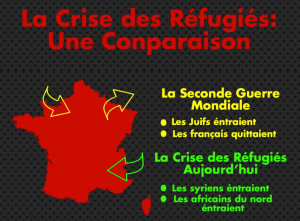 that makes a comparison between the refugee crisis during and after the second world war and the current crisis in 2016. You may identify some guiding questions of your own.”
1946 et 2016: Deux Crises des Réfugiés
By Lucy Cao, Keely Dion, Nick Hadlock, and Michael Nantais, VI Form; Summer Hornbostel, V Form; Selina Wu, IV Form
1946 et 2016: Deux Crises des Réfugiés
Editor’s Note: The assignment in Advanced French–Francophone World:“Working together you are going to create an infographic that makes a comparison between the refugee crisis during and after the second world war and the current crisis in 2016. You may identify some guiding questions of your own. (more…)

Global Connections of Media and Skin
By June Seong, IV Form
Global Connections of Media and Skin

Amidst the chaos that is my life – including the future I must decide upon, the necessity to be “special,” and my attempt to make this post somewhat grammatically correct – I am struck by my simultaneous privilege and ignorance. This privilege and ignorance is exhibited through myriad ways at this very moment: 1) this dull MacBook Air that I am communicating through and that was probably configured by an underpaid or unpaid laborer; 2) the whizzing air conditioning that is breathing on my neck so that I might not die from heatstroke whilst the world scales up a few sweltering Centigrades; 3) the immensity of the world that is within computer click’s reach via Facebook. (more…)
Memorialization, Memory, and the Civil War
By Joseph Lyons, IV Form
Memorialization, Memory, and the Civil War:
The Evolution of Civil War Memory through the Monuments of North Carolina and Maine
Introduction:
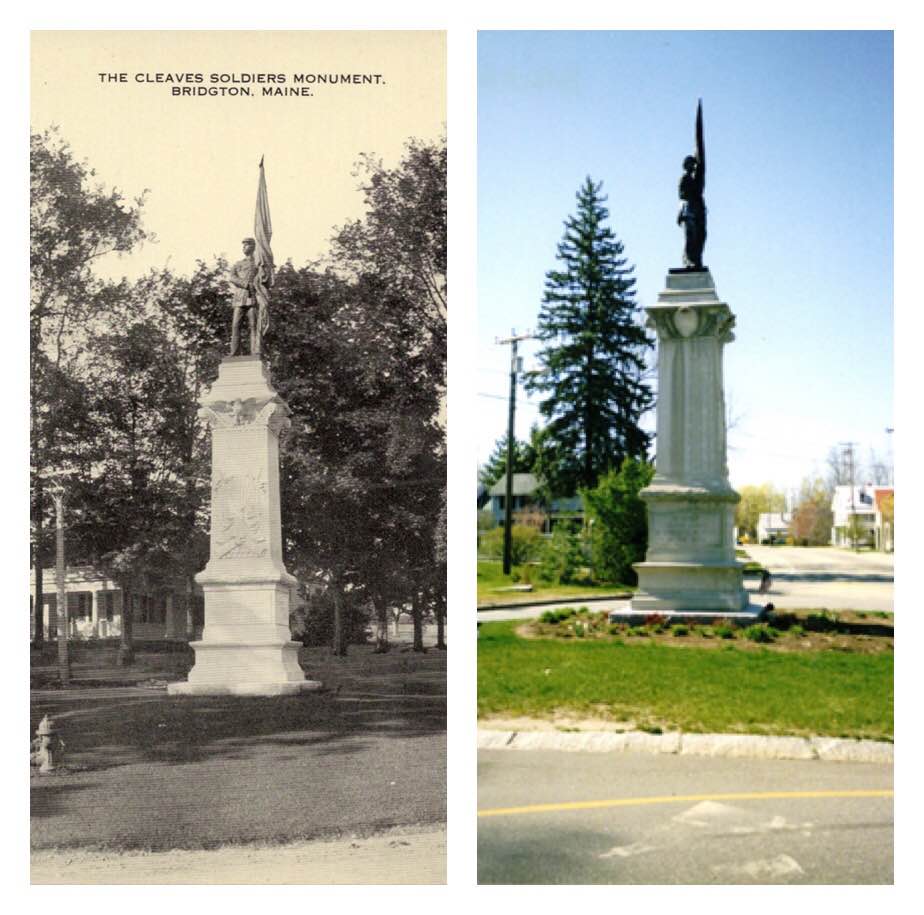 Driving up the hill from downtown Bridgton, Maine, one sees a towering Civil War monument looming on the horizon. The monument itself is unremarkable, as there are at least 144 other Civil War memorials in the state. Given the imprint that this conflict left on America’s collective memory, the prolific memorial-building efforts in Maine are no surprise. However, the way Maine memorials portray the conflict is rather puzzling. Despite the fact that the Union fought the war, at least in part, for emancipation and racial equality, Mainers constructed monuments, like the one in Bridgton, that largely disregarded the significance of slavery to the conflict. The inscription on the Bridgton monument reads: (more…)

Working Together to Launch the Model UN Club
By Isabelle Kim, Jovin Ho, & Rachel Wang, IV Form and Matt Walsh, Stephanie Moon, & Alan Gao, III Form
Working Together to Launch the Model UN Club
To understand what the “Model United Nations Club” is, it is essential to know the concept of the “Model United Nations” or “MUN”. Model United Nations acts as a simulation of United Nations conferences, in which participants act as delegates. Delegates represent various countries and their ideals, and engage in formal debates over global issues as well as international affairs, through which a resolution is achieved that is, ideally, satisfactory for all parties involved. A couple of weeks prior to the conference, the delegates are assigned respective countries, councils, and issues that will be debated upon, thus allowing delegates ample time to research the topic at hand and formulate their arguments. A big part of MUN is the delegates recognizing that they are not representing themselves, but are a part of a larger picture, having to uphold their country’s beliefs. (more…)

A Novel of Reaction: Larsen’s Passing
By Charlotte Wood, V Form
A Novel of Reaction: Larsen’t Passing
W.E.B. Dubois wrote that “all Art is propaganda and ever must be…” He thought that artists and writers should try to make the world a better place through their work. Nella Larsen, the author of Passing, would not agree. Her novel centers on two light-skinned black women, Clare Kendry and Irene Redfield, and their respective decisions to pass as white or not. I believe she wrote this novel not to persuade the reader of something or to convince them to enact change, but rather to reflect the world how she sees it. The book is a reaction to society, not something for society to react to. Passing itself is portrayed as something that simply is, not wholly good or wholly bad. Both characters participate in it, and so the reader is not meant to side with one over the other. The relative passivity of its message is reflected in the passivity of its main character, Irene. Because she is not active, the intention of the novel is not active. Lastly, the ambiguity of the ending leaves the reader, like Irene, with more questions than answers. (more…)
The Second Amendment Debate
By Joey Lyons, VI Form
The Second Amendment Debate
“A well regulated Militia, being necessary to the security of a free State, the right of the people to keep and bear Arms, shall not be infringed.” – Second Amendment to the United States Constitution
In the 1960s, the assassinations of renowned public figures, such as Martin Luther King and President John F. Kennedy, sparked an intense, national debate over gun control. The debate between gun control supporters and gun rights advocates continued into the twenty-first century and continues in the present day. Gun control supporters argue that unrestricted gun rights cause avoidable atrocities and that the Second Amendment does not guarantee an individual the right to bear arms. Gun rights advocates believe the right to bear arms is not only necessary for self-defense, hunting, and security against tyranny, but is also protected by the Second Amendment.

Make Peace With the Day to Enjoy the Evening: Remains of the Day
By Gabriel Xu, V Form
Make Peace With the Day to Enjoy the Evening: Remains of the Day
There’s an old Chinese idiom that roughly translates to, “The person on the spot is baffled, the onlooker sees clearly”. Surely, this applies to the case of Mr. Stevens. As the aged butler in Remains of the Day travels farther away from the house he has been in service of for decades, he starts to see the truth of his former employer more clearly — a truth so dark and ugly that Stevens has tried very hard to escape. Although Mr. Stevens is forced to learn the tragic truth about his former lord and consequently his own small, yet undeniable contribution as butler to the evildoing his master was conducting, the meeting with Ms. Kenton, a former housekeeper, allows him to see value in his decades of service, to make peace with his past, and eventually to move forward into a hopeful future. (more…)


 LEO
LEO 