
Home » Posts tagged 'History' (Page 7)
Tag Archives: History

The Shen Prize Speech Competition: Contraction or Expansion of Democracy in American History
By Colin Capenito, Rosanna Zhao, and Matthew Gates, V Form
The Shen Prize Speech Competition: Contraction or Expansion of Democracy in American History
Editors’ Note: Below are three finalists of The Shen Prize Speech Competition
Winner–Colin Capenito: On The Federal Reserve and Democracy
Money. We work for it. We fight for it. We die for it. We live because of it. Whether you agree with this reality or not, there can be no denying that money is at the front and center of our society. And when something goes wrong with our money? We panic. And when we panic, we make rash decisions, decisions that often lead to unforeseen consequences. This happens every day on an individual level- panic tied to money. But what happens when this panic, followed by rash decision making, happens at a national level?
Well, we do not need to ponder over this question, because the answer already exists- and that is the Federal Reserve. The Federal Reserve Act was signed by President Woodrow Wilson on December 23rd, 1913. The act gave way to the creation of the Federal Reserve System in 1914, the central banking system that we still live under today.
Click here for the full speech!
Runner up–Rosanna Zhao: America and the Holocaust
During the start of World War II, a complete autocracy was becoming increasingly powerful across the oceans, spreading ideals that starkly contrasted American democracy. American democracy is not only the guarantee of social equality for every citizen of the country, but also the divine obligation to project social equality onto every corner of the world – a world without discrimination for race, ethnicity, or religion. On the other hand, Hitler led Nazi Germany to spread terror and oppression across Europe, erasing all traces of social equality for many minorities, especially Jews. (more…)

The President Who Made Apollo: John F. Kennedy and The U.S. Soviet Moon Race, From His Speeches, Letters, and Memos
Mo Liu, VI Form
The President Who Made Apollo: John F. Kennedy and The U.S. Soviet Moon Race, From His Speeches, Letters, and Memos
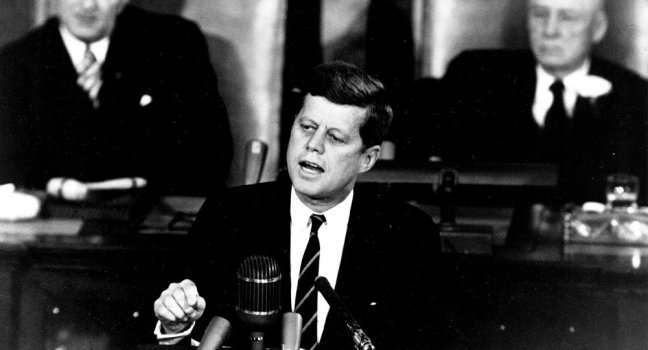
Editors’ Note: Mo Liu conducted her History Fellowship research on J.F. Kennedy and his decision to go to the Moon. Below is the introduction and you can click here for the full paper:
Introduction
Soviets, Space, and Sputnik
As the gunpowder smoke of the Second World War slowly faded away, the United States and the Soviet Union were the only two superpowers remaining, and the formal allies soon turned into bitter rivals.[1]The United States believed it stood supreme in ideals, leadership, and influence, while the Soviet Union was determined to contest that claim and “by any means necessary” secure its position at the top.[2]Given the intense differences between their ideologies, cultures, and government structures, conflicts were inevitable. The Cold War, the longest war in modern history, began quietly without a shot of cannon.
Towards the end of WWII, the United States and the Soviet Union were competing for German rocketry technology as well as scientists working on the rocket development project. Rockets received attention primarily due to their potential as a military weapon; the sole function of rockets was thought to be as carriers of atomic warheads. The United States and the Soviet Union’s desperation to gain the secrets to German rocketry was, therefore, a result of their desire to strengthen each nation’s military arsenal. The rocketry competition rose to new heights on October 4, 1957, when the Soviets launched the first satellite into orbit.[3]The Soviet Union accomplished this great feat without making any previous announcement, so, when amateur space enthusiasts in the United States picked up Sputnik’s radio signals as it flew across the American sky, the entire nation reacted with amazement and disbelief. In an open letter to The New York Herald Tribune, economist Bernard Baruch described America’s reaction to Sputnik: “Suddenly, rudely, we are awakened to the fact that the Russians have outdistanced us in a race which we thought we were winning. It is Russia, not the United States, who has had the imagination to hitch its wagon to the stars and the skill to reach for the Moon and all but grasp it.”[4]The space race, as people would later call it, had officially begun. (more…)

Evolution and Revolutions in Physics (with Tiki-Toki)
By Tony Banson, Colton Bullard, John Cho, Thayer Cornell, Alan Gao, Jovin Ho, Izzy Kim, Ivy Li, Helynna Lin, Sada Nichols-Worley, Cooper Schmitz, Jonathan Shakespeare, Leon Shi, Alex Song, Alan Yang, Justin Zhang
Evolution and Revolutions in Physics (with Tiki-Toki)
Editors’ Note: In “Advanced Physics: Modern Topics in Physics,” the class is collaborating on a “Timeline” of physics, utilizing the online tool Tiki-Toki. The timeline is an ongoing work in progress throughout the course, hence moments, details, and explanations are added as completed.
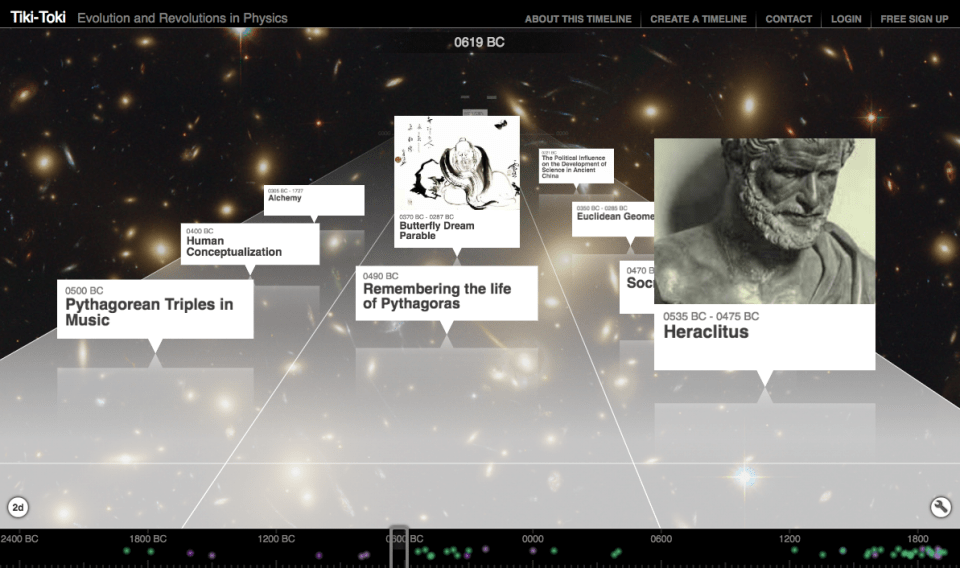
Click on the image or here to go the Tiki-Toki site for the timeline.
The best way to view it is as a 3D “highway (look for the round 3d button on the lower left of  your screen), but it is also visible as a conventional 2D side-scrolling timeline. (more…)

The Reach for Perfection in the Jacksonian Era
By Matthew Gates, V Form
The Reach for Perfection in the Jacksonian Era
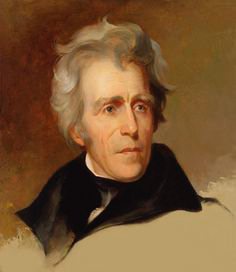 Although Andrew Jackson, the seventh President of The United States, only held office from 1829 to 1837, he made a profound impact on American history. During “The Jacksonian Era,” (1816-1841) the economy boomed, technology advanced, American borders expanded, but most importantly, the common man gained a sense of importance, and American optimism and patriotism were “unbounded” and “infectious” (Remini 108). It was a time of “passionate commitment to democracy” (Remini 122).
In response to the boom in the economy and the growth of industry and materialism in America during the Jacksonian Era, the theme of Culture and Society is evident throughout the Transcendental Movement. This movement, which originated in Massachusetts, emphasized the divinity of man and his connections to God and stressed the beauty in nature in a society preoccupied with materialism. Transcendentalists such as Henry David Thoreau and Ralph Waldo Emerson encouraged Americans to live more modestly and enjoy the simplicity of nature. Emerson referred to the growing obsession of the American people to gain wealth as “‘the demon of reform,’” thereby proving that the emergence of the Transcendental Movement was necessary to respond to the expansion of American industrialism and materialism (Remini 73). Even today, there are still Transcendentalists who believe in the importance of living humbly and recognizing the beauty in nature in daily life. (more…)

Counterculture & The Graduate and its Soundtrack by “Simon & Garfunkel”
By Helynna Lin, VI Form
Counterculture & The Graduate and Its Soundtrack by “Simon & Garfunkel”
I. Introduction
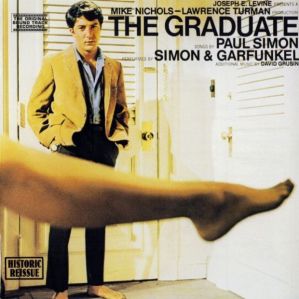 The term Counterculture refers to a set of movements, ideal, and practices that emerged in the American culture between the 1960s and the 1970s. The counterculture was largely a response to the Cold War’s effects on the American society, and there were four core beliefs. First, advocates for counterculture rejected capitalism, for they believed that western corporates used Cold War politics to expand their markets worldwide and gain a larger profit. Second, in response to the rise of uniformity, counterculture rejected conformism and encouraged individuals to break the shackles of society’s expectations. Third, the rise of individualism caused an emergence of sexual liberation and experimentation as a movement against the traditional family model. Finally, the counterculture was mainly supported by the teenage generation, who came up with the slogan “don’t trust people over 30”.[1] [2]
Mike Nichol’s The Graduate (1967) is a bildungsroman that illustrates the transition from teenage years to adulthood of the protagonist, Benjamin Braddock. The movie’s soundtrack features many songs by “Simon & Garfunkel”, a folk-rock duo formed by Paul Simon and Art Garfunkel. (more…)

What to Do with Confederate Monuments
By Matt Walsh, V Form
What to Do with Confederate Monuments
Despite the meteoric rise of clickbait fake news, the majority of “alternative facts” don’t come from shady fake news websites. Rather, they come from our distorted perception of American history. I only had to read one chapter of Dr. James Loewen’s Lies My Teacher Told Me, a book that sheds light on the dishonesty of American history textbooks, to realize the problems with American history education. Lauded by the likes of Howard Zinn and Jon Wiener, Lies My Teacher Told Me provides a thorough examination of the lies promulgated by American history textbooks.
Dr. James Loewen, who holds a Ph.D. in sociology from Harvard University and taught at the University of Vermont and Mississippi’s Tougaloo College, came to visit St. Mark’s in October of 2017. Dr. Loewen’s talk to the St. Mark’s faculty and student body regarded the danger of misconceptions of the past and centered on the problems with Civil War monuments honoring Confederate generals. Loewen asserted that the construction of these statues—often in veneration of Robert E. Lee or Jefferson Davis—represent what he calls a “nadir” in racial equality in the United States. (more…)
Words, Legacy, and Memory: What We Can Learn From the Inscriptions on Civil War Monuments
By Mo Liu and Katherine Wass, VI Form
Words, Legacy, and Memory: What We Can Learn From the Inscriptions on Civil War Monuments
In the first month of History Research Fellowship, we looked at symbols and memories, specifically
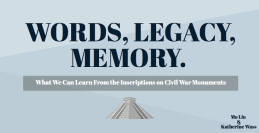
Click image for full Piktochart
those tied to the Civil War. We were particularly drawn to the difference in sentiments in the North and the South in the decades following the end of the Civil War and how they are reflected in the monuments. With access to the 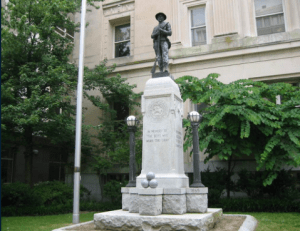 monument database in Maine and North Carolina, we picked these two states to be the representative of the Union and the Confederacy, respectively.
Katherine and Mo’s fullInfographic can be found here (more…)

Belonging in Cunha’s “A Study of Homeland in Displacement” and Alexie’s “Honor Society”
By Mary Flathers, V Form
Belonging in Cunha’s “A Study of Homeland in Displacement” and Alexie’s “Honor Society”
Belonging is a widely discussed topic in the present day. Whether it is belonging to a certain race, religion, or gender, a sense of unity is created among people who share a common aspect in life. Within Fernanda Cunha and Sherman Alexie’s short stories, respectively entitled “A Study of Homeland in Displacement” and “Honor Society,” the element of belonging is explored in depth. In both of these stories, the narrators struggle with family ties and their identities. However, in Alexie’s story, the narrator focuses on creating a future and leaving behind a home, while in Cunha’s story, the narrator holds onto her past by maintaining the home in her mind.
 These stories are similar in a multitude of ways, and the most prominent similarities appear in the narrators’ management of family and identity. In Alexie’s story, the love and respect the narrator has for his family are evident when he begins to “sing and drum with [his] mother and father” (Alexie 1). Though he does not believe in the “God” they sing of, he is willing to overcome the pride he has in his own ideologies to respect the beliefs of his family. Similarly, in Cunha’s story, the narrator has fond memories of a loving community. She recalls her grandfather as a man who “smokes a pack a day and laughs the way [she] remember[s] like he’s invincible” (Cunha 1). Though at times the borders placed around her family by the nations they live in seem too large to bear, as seen when the narrator tries “to better [her] [native language,] Portuguese, soften it so it is less jagged” (Cunha 1), the attachment the narrator has to her family allows for her to overcome these obstacles. Through studying this vital aspect of her memory, the narrator maintains her past identity. (more…)


 LEO
LEO 