Home » Posts tagged 'Grant'
Tag Archives: Grant
Chicanismo: Examining Mexican-American Culture, History, and Perspectives Through Photography
By Jonathan Hernández, VI Form
Chicanismo: Examining Mexican-American Culture, History, and Perspectives Through Photography
Editor’s Note: This project was made possible with the support of the Class of 1968 V Form Fellowship. At their 25th reunion, the Class of 1968 created a fund to provide grants to V Form students for independent study during the school year or, more commonly, during the summer between V and VI Forms. Their intent in establishing this fund was to reward independent thinking, ingenuity, and planning and to encourage the student in exploring non-traditional fields of inquiry or using non-traditional methods of investigation.
Student-Submitted Note: This past summer, I took part in The Class of 1968 V Form Fellowship and used my grant funds to travel to Los Angeles to look at Latinidad and Mexican-American identities and spaces through a photographic lens. I compiled what I learned (in addition to a bit of research I completed) in an academic reflection uploaded below.
“We cannot seek out achievement for ourselves and forget about progress and prosperity for our community… Our ambitions must be broad enough to include the aspirations and needs of others, for their sakes and for our own.” — Cesar Chavez.
Chicana/o/x or Xicana/o/x (both pronounced the same way) refer to persons of Mexican descent who grew up in the United States. The experiences of these Chicana/o/x persons are notably different from the experiences of simply American or Mexican individuals as neither identity has wholly encapsulated their background. Chicanismo, what this grant project was built around, is pride in one’s Chicana/e/o/x heritage. With the completion of this project, it is my hope to share what I have learned about the spaces I visited to provide insight into Mexican-American history, culture, and perspectives.
It is believed that Chicanos descend from indigenous groups who lived in Aztlán – the American Southwest region encompassing Arizona, California, Texas, New Mexico, Colorado, and parts of Oklahoma. As part of Spain’s colonial efforts, a racial hierarchy was instituted through a caste system called the “Castas” system. The Castas system unlike America’s system of race accounted for cultural mixing and recognized that Spain’s colonization of the Americas promoted cross-cultural interactions and allowed different groups of people to interact, trade, and marry with each other. Yet, the Castas system did not only organize persons based on their outward appearance but also on their parents’ individual races. For instance, a child with a West African father and Indigenous mother would most likely work as a laborer or farmer. Still, a child with an Anglo father and Meztic mother would most likely live an educated noble life. In fact, the practice of interracial marriage was so popular or so prominent that in the First Census of Los Angeles in 1978 a significant majority of the citizens identified as Mestizaje or of “mixed blood” (Webber 33-34). Thus, for many Mexicans and Latinos, it has proven difficult to identify wholly with one race over another because of interracial marriage and mixing throughout the decades.
After the Mexican Cession and the signing of the Treaty of Guadalupe Hidalgo, the US gained territory in what is today the American Southwest. In states like Texas, New Mexico, California, Colorado, Arizona, and Nevada which belonged previously to Mexico (and before that the Native American peoples in the region), about one hundred thousand people who decided to stay in the territories became U.S. citizens. Thus, began the formation of the Mexican-American identity.
(more…)Pursuing My Passion for Finance with the Help of The Class of 1968 V Form Grant
By Kanav Sahani, Class of 2023
Pursuing My Passion for Finance with the Help of The Class of 1968 V Form Grant
Editor’s Note: This project was made possible with the support of the Class of 1968 V Form Fellowship. At their 25th reunion, the Class of 1968 created a fund to provide grants to V Form students for independent study during the school year or, more commonly, during the summer between V and VI Forms. Their intent in establishing this fund was to reward independent thinking, ingenuity, and planning and to encourage the student in exploring non-traditional fields of inquiry or using non-traditional methods of investigation.
Student-Submitted Note: I received the Class of 1968 V form grant so that I could attend a summer program at Bentley University called Wall Street 101.
I chose to attend the Wall Street 101 course at Bentley University because it provided me with a unique opportunity to pursue my passion for finance and experience firsthand the dynamic environment of a real actual trading room, unlike any other program available today.
I developed a keen interest in finance after I watched a Youtube video featuring the renowned Warren Buffett. In the video, Buffet recommended reading The Intelligent Investor by Benjamin Graham. Since then, I have enhanced my financial knowledge through books, professionals, internships, Youtube videos, and courses at Wharton and Georgetown. I wanted to share my knowledge, and to do so, I founded the finance club at my former school, Fay, and took on a leadership role in the finance club at St. Mark’s, known as SM Finance. The courses at Bentley taught me three topics that my previous research had not to fully elucidated: Stock Market & Investment Research, Portfolio Management, and Macroeconomy and Financial Markets. I plan to become an investment banker, and this course gave me an overview of all the needed knowledge.
My daily schedule involved attending a class with a professor who delivered us a unique lesson every day, listening to watching a guest speaker who shared valuable insights on finance-related topics, and collaborating with my group on our capstone project.
(more…)Increasing Accessibility in the Literary Community with the V Form Fellowship: The Aurora Journal
By Sophie Chiang, VI Form
Increasing Accessibility in the Literary Community with the V Form Fellowship: The Aurora Journal
Editor’s Note: This project was made possible with the support of the Class of 1968 V Form Fellowship. At their 25th reunion, the Class of 1968 created a fund to provide grants to V Form students for independent study during the school year or, more commonly, during the summer between V and VI Forms. Their intent in establishing this fund was to reward independent thinking, ingenuity, and planning and to encourage the student in exploring non-traditional fields of inquiry or using non-traditional methods of investigation.
When I created The Aurora Journal (theaurorajournal.org) two summers ago, I just planned to publish my friends’ writing for fun. Literary journals were everywhere–all one had to do was submit their poetry and prose to them and hope their writing would be accepted and published. So never did I imagine that my own Journal would be able to reach thousands of submissions and be featured in news sites and blogs–a testament to the passion of our contributors. But when I first started gaining traction, I knew I wanted to do something more with my platform than just publishing writers. There exists a significant disparity gap in the writing world, in which cisgender, wealthy, educated white males dominate. With the support of the V Form Fellowship and many writer friends, The Aurora Journal has been able to make a positive impact in promoting inclusivity and accessibility in the writing community.
Education in Underfunded Zimbabwean Societies
By Charlene Tariro Murima, VI Form
Education in Underfunded Zimbabwean Societies
Editor’s Note: This project was made possible with the support of the Class of 1968 V Form Fellowship. At their 25th reunion, the Class of 1968 created a fund to provide grants to V Form students for independent study during the school year or, more commonly, during the summer between V and VI Forms. Their intent in establishing this fund was to reward independent thinking, ingenuity, and planning and to encourage the student exploring non-traditional fields of inquiry or using non-traditional methods of investigation.
Student-Submitted Note: To encourage a more globally-minded perspective and understanding of diverse educational practices, I received a grant through The Class of 1968 V Form Fellowship and traveled back to Zimbabwe during the summer of 2022. I conducted anonymous and in-person interviews. In these interviews were students and teachers informing me more about the country’s education system.
Student-Submitted Disclaimer: This article contains mentions of abortion and sexual abuse.
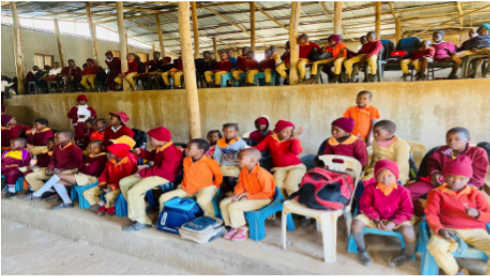
Over the summer of 2022, I traveled back to Zimbabwe to work on a documentary called Education in underfunded towns of Zimbabwe such as Dzivaresekwa, Concession, Mazowe, and Kuwadzana with the goal to educate my peers and schoolmates about some of the challenges students in Zimbabwe face. To make this study possible, I received a grant from the St. Mark’s Class of 1968 V Form Fellowship. I was able to visit many schools that lacked government funding or had limited resources, and I conducted anonymous and in-person interviews with students and teachers. I learned that the education system in Zimbabwe encompasses 7 years of primary school and 6 years of secondary school. It runs from January to December. The school year is a total of 3 terms with a one-month break, totaling 40 weeks per year. I asked a few students in person and anonymously online what they thought about the country’s education system and what they hope to change. Recurring themes of sparse resources and perpetual sexual abuse from those meant to educate them surfaced.
Social Media & Privacy: Why Should We Care?
By Anika Sukthankar, VI Form
Social Media & Privacy: Why Should We Care?
Editor’s Note: This project was made possible with the support of the Thomas H. Kean ’53 Fellowship. At their 25th Reunion in 1987, the Class of 1962 established the Thomas H. Kean ’53 Fellowship Program to honor Tom Kean, their teacher, advisor, mentor, and friend. The purpose of this fellowship is to enable students to explore important public policy topics and to embark upon exemplary lives of public service in the spirit of Governor Kean.
Student-Submitted Note: As part of the Kean Fellowship, I took a college-level course called STS 1101: Science, Technology, and Politics. We studied several scientific controversies to further explore the relationship shared between technology and politics, and understood the societal implications. My deliverable was to write a LEO article on what I have found and researched.
“Behavioral advertising generates profits by turning users into products, their activity into assets, their communities into targets, and social media platforms into weapons of mass manipulation.”
-Rohit Chopra in his 2019 dissent against Facebook
As technology evolves and becomes an integral part of our society, the controversies surrounding its proper use and associated governmental policies have become increasingly complicated. We are building complex socio-technical systems that seem to guide our very behaviors and thinking. From the addictive nature of social media to privacy concerns, governmental policies seem to be lagging technological advancements. Events, such as the Capitol hearings, have made this topic of great interest.
Social media has become incredibly popular in recent years, with over 400 million new users joining these platforms annually. Despite this popularity, the majority of users are uncomfortable with the collection of personal data and believe that the government needs to do more to regulate the tech companies. Rebuilding trust between users and the social media companies will take a triumvirate of public awareness, self-regulation by the social media companies themselves, and government regulations.
(more…)
Amyklaion Excavation
By Frank S. Ruperto, VI Form
Amyklaion Excavation
Editor’s Note: This project was made possible with the support of the Class of 1968 V Form Fellowship. At their 25th reunion, the Class of 1968 created a fund to provide grants to V Form students for independent study during the school year or, more commonly, during the summer between V and VI Forms. Their intent in establishing this fund was to reward independent thinking, ingenuity, and planning and to encourage the student in exploring non-traditional fields of inquiry or using non-traditional methods of investigation.
My experience at the Amyklaion Excavation program in Sparta, Greece, this past summer enabled me to bring the Classics to life. The Hellenic Education and Research Center offered the program, which consisted of an excavation, archaeological method and practice, on-site documentation and cataloging of artifacts, and Greek epigraphy.
Amkylaion is located in the southeastern Peloponnese region of Ancient Greece. The site was a ritualistic temple to Apollo and Hyacinthus. Our group sectioned it off into steps for the purposes of excavating and recording our findings in an organized manner. Some of the participants would work on a five-meter wall, using a pickaxe to loosen up the dirt. They would rummage through the loose dirt, shoveling the dirt off the wall. The person sifting through the dirt would separate out any artifacts. Others in our group would clean the newly discovered pieces, using only water and a toothbrush, before separating each piece into different sections by time period, which was determined based on both color and design. These artifacts would eventually go to the laboratory to be marked and recorded. By studying artifacts that were part of daily ancient Greek life, I strengthened my knowledge of Greek culture and my understanding of the ancient world.
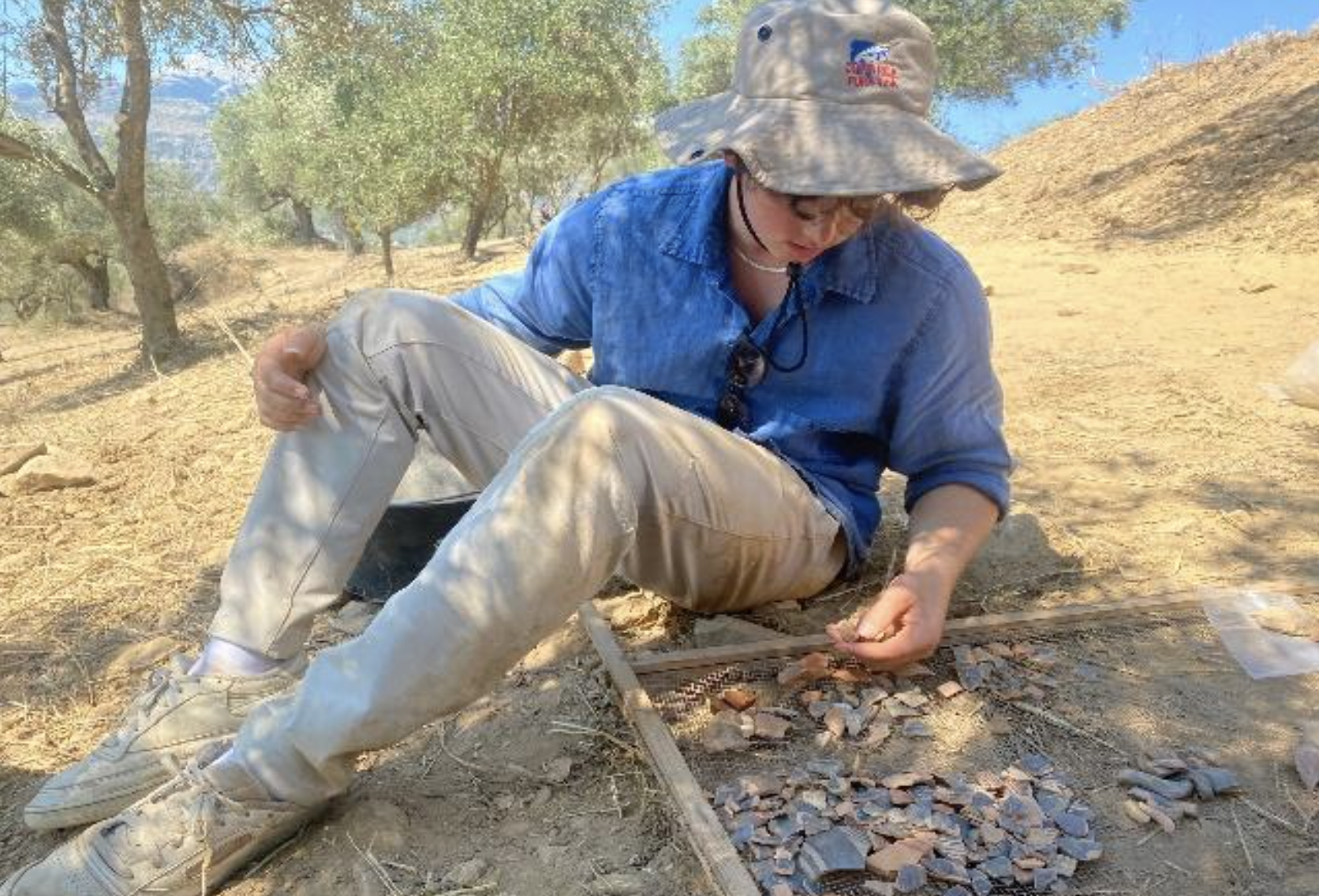
Figure 1: Sorting Artifacts Based Off Time Period
(more…)Teens without Screens
By Ryan Krantz, VI Form
Teens without Screens
Editor’s Note: This project was made possible with the support of the Class of 1968 V Form Fellowship. At their 25th reunion, the Class of 1968 created a fund to provide grants to V Form students for independent study during the school year or, more commonly, during the summer between V and VI Forms. Their intent in establishing this fund was to reward independent thinking, ingenuity, and planning and to encourage the student exploring non-traditional fields of inquiry or using non-traditional methods of investigation.
Student-Submitted Note: I was awarded this grant to take a surfing road trip down the East Coast, without my phone.
In a world where humans are becoming increasingly dependent on electronic devices in all aspects of our lives, adolescents are particularly susceptible to screen addiction. The average American teenager spends over seven hours a day on screens, which accounts for about 40% of our conscious realities. My friends and I realized that we too, are victims of the “screenager” epidemic, and we wanted to know what our lives would be like if we didn’t have phones. In the winter of my junior year, I received a grant from the Class of 1968 V Form Fellowship at St. Marks to take a road trip along the east coast without my phone. My two best friends Conor Sullivan and Toby Zeidenberg agreed to come along on the road trip, and so on August 11, 2022, we left our phones, computers, and all other screens behind and hit the road.
(more…)Researching Foreign Aid with the Help of The Thomas H. Kean ’53 Fellowship
By Kanav Sahani, V Form
Researching Foreign Aid with the Help of The Thomas H. Kean ’53 Fellowship
Thomas H. Kean ’53 Fellowship:
The Class of 1962, at their 25th Reunion in 1987, established the Thomas H. Kean ’53 Fellowship Program to honor Tom Kean, their teacher, advisor, mentor, and friend. The purpose of this fellowship is to enable students to explore important public policy topics and to embark upon exemplary lives of public service in the spirit of Governor Kean.
Kean Fellowships will be conferred upon a small number of highly well-qualified students who propose and undertake independent research and study in the field of public service, exploring meaningful domestic public policy issues. Once selected, and on the basis of their topic, Fellows will work with a faculty mentor and find meaningful connections with academicians and leaders in the field of public policy. The Fellowship will engage the students in cutting-edge topics and in a manner that is serious and capitalizes upon what they have learned at St Mark’s.
I chose to attend the economics policy academy at Georgetown University because it teaches a unique combination of economics and political science and how to use this knowledge to solve real-world problems. I find these topics interesting because they have so much influence on how the world works, so once I found this course online, I knew I would want to join it. My interest in the more political side of the world started with the social justice class I took with Dr. Worrell during the spring semester of my sophomore year. In addition, my interest in the economic side started with learning about the legendary investor Warren Buffet. Following his story on how gained investing fame by sticking to his strategy has increased my interest in the finance and economic sectors.
(more…)

 LEO
LEO 