
Home » Posts tagged 'English' (Page 6)
Tag Archives: English

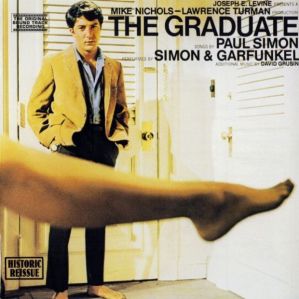
Counterculture & The Graduate and its Soundtrack by “Simon & Garfunkel”
By Helynna Lin, VI Form
Counterculture & The Graduate and Its Soundtrack by “Simon & Garfunkel”
I. Introduction
 The term Counterculture refers to a set of movements, ideal, and practices that emerged in the American culture between the 1960s and the 1970s. The counterculture was largely a response to the Cold War’s effects on the American society, and there were four core beliefs. First, advocates for counterculture rejected capitalism, for they believed that western corporates used Cold War politics to expand their markets worldwide and gain a larger profit. Second, in response to the rise of uniformity, counterculture rejected conformism and encouraged individuals to break the shackles of society’s expectations. Third, the rise of individualism caused an emergence of sexual liberation and experimentation as a movement against the traditional family model. Finally, the counterculture was mainly supported by the teenage generation, who came up with the slogan “don’t trust people over 30”.[1] [2]
Mike Nichol’s The Graduate (1967) is a bildungsroman that illustrates the transition from teenage years to adulthood of the protagonist, Benjamin Braddock. The movie’s soundtrack features many songs by “Simon & Garfunkel”, a folk-rock duo formed by Paul Simon and Art Garfunkel. (more…)

Creating an Online News Source in Writing Workshop
By Emma Viens, IV Form
Creating an Online News Source in Writing Workshop
Editor’s Note: For this assignment, students were tasked with creating an online news source format in a personalized genre/style/theme. It required seven articles, including an editorial, MLA citations, and sections. A title with a pun on their names was encouraged (hence Emma’s title!).
Click here or on any image to see the full News Source.


School Schedules’ Impact on Teenage Brains & Adolescent Sleep
By Helen Huang, Reese Hornstein, and Aditya Mynampaty, IV Form
School Schedules’ Impact on Teenage Brains & Adolescent Sleep
Editors’ Note: In the IV Form Writing Workshop course, students responded to various prompts after listening to a podcast on adolescent sleeping patterns and the brain.
Helen Huang–
With the early start times and little free time, the current St. Mark’s schedule ineffectively addresses how teenagers get their sleep. Sleep is essential to functioning efficiently throughout the day. Why do teens, whose brains are developing and growing, subject themselves to sleepless nights on a regular basis? Schools like St. Mark’s have tried to account for the little sleep teens get by starting classes at 8:00 or 8:30 am, but kids still arrive to class tired and mentally unprepared from insufficient sleep. The St. Mark’s schedule ineffectively addresses how teenagers manage their sleep pattern. Teenagers do not start waking up until around 9:00 or 10:00 am, and until then, their bodies and minds are not fully alert and ready to absorb information (Rogers 5). Therefore, changing the start time of classes by an hour may not be enough to help adolescents get an adequate amount of sleep. (more…)

The Pitch Project TV Show Winner: “The Second Reality”
By Summer Hornbostel, Pete Nugent, and Hailey DuBose, VI Form
The Pitch Project TV Show Winner: “The Second Reality”
Title: “The Second Reality”
Logline: If the first reality fails, there will always be the second one.
Elevator Pitch: “The Second Reality” is a show about alternate realities, and how the decisions that characters make affect their futures. If you think about it, every decision that we make can have multiple different outcomes, meaning that there are multiple different realities that we could possibly live out. In our show, “The Second Reality”, there is no such thing as one reality. You live one reality, but some people are given the chance to go back and change their biggest mistake, thus leading to their second reality. However, characters don’t know that they have the opportunity to go back, otherwise they might live their first reality without care. While living their second reality characters are able to remember their first one in order to justify it as actually being reality.
Synopsis: In our show, “The Second Reality”, we explore what it would be like to have the opportunity to go back and change our biggest mistake. In the show, we follow four stories of four different people going through various times in their lives. They have to deal with the everyday struggles in life that we do, but there’s one catch. They’re able to go back and change their biggest mistake. As soon as the characters make a mistake that negatively alters their own life and the lives of others, the universe (more…)

Newton’s Law of Synchronicity?
By Kyle Rubin, VI Form
Newton’s Law of Synchronicity?
Sir Isaac Newton’s third law of motion, which reads, “For every action, there is an equal and opposite reaction,” can be applied outside of the scientific realm and into the philosophical realm in that every action is done for a reason. With this in mind, synchronicity exists in that one thing can provide context for another, whether they have a direct correlation or not.
Synchronicity provides context for how or why some things occur. It explains how two things, whether physical or conceptual, may seem related even though they have no discernable connection. Newton’s third law of motion covers similar bases to synchronicity, in that the third law gives insight into the opposing side of an action. Newton provides the reason for why a reaction will happen, similar to how synchronicity describes why events appear similar even though they may not be explained by conventional standards. (more…)

“Is All Our Company Here?” –Shakespeare at St. Mark’s
By Richard E. ”Nick” Noble, SM & SS ‘76
“Is All Our Company Here?” –Shakespeare at St. Mark’s
QUINCE: Is all our company here?
BOTTOM: You were best to call them generally, man by man,
according to the scrip.
QUINCE: Here is the scroll of every man’s name, which is
thought fit, through all Athens, to play in our
interlude before the duke and the duchess, on his
wedding-day at night.
BOTTOM: First, good Peter Quince, say what the play treats
on, then read the names of the actors, and so grow
to a point.
In the fall of 1972, veteran St. Mark’s English teacher Jay Engel directed a production of A Midsummer Night’s Dream. It was the third of what would eventually be five productions of the popular Shakespearean comedy at the School. It is vivid in my memory, because I played the central role of “Nick Bottom, the Weaver,” wearing denim overalls for a costume. It was also my first introduction to performing Shakespeare. Like so many St. Markers, my first in-depth interaction with the Bard of Avon happened right here on the SM campus. (more…)

Belonging in Cunha’s “A Study of Homeland in Displacement” and Alexie’s “Honor Society”
By Mary Flathers, V Form
Belonging in Cunha’s “A Study of Homeland in Displacement” and Alexie’s “Honor Society”
Belonging is a widely discussed topic in the present day. Whether it is belonging to a certain race, religion, or gender, a sense of unity is created among people who share a common aspect in life. Within Fernanda Cunha and Sherman Alexie’s short stories, respectively entitled “A Study of Homeland in Displacement” and “Honor Society,” the element of belonging is explored in depth. In both of these stories, the narrators struggle with family ties and their identities. However, in Alexie’s story, the narrator focuses on creating a future and leaving behind a home, while in Cunha’s story, the narrator holds onto her past by maintaining the home in her mind.
 These stories are similar in a multitude of ways, and the most prominent similarities appear in the narrators’ management of family and identity. In Alexie’s story, the love and respect the narrator has for his family are evident when he begins to “sing and drum with [his] mother and father” (Alexie 1). Though he does not believe in the “God” they sing of, he is willing to overcome the pride he has in his own ideologies to respect the beliefs of his family. Similarly, in Cunha’s story, the narrator has fond memories of a loving community. She recalls her grandfather as a man who “smokes a pack a day and laughs the way [she] remember[s] like he’s invincible” (Cunha 1). Though at times the borders placed around her family by the nations they live in seem too large to bear, as seen when the narrator tries “to better [her] [native language,] Portuguese, soften it so it is less jagged” (Cunha 1), the attachment the narrator has to her family allows for her to overcome these obstacles. Through studying this vital aspect of her memory, the narrator maintains her past identity. (more…)

On Spoken Word Poetry
By Grace Darko, VI Form
On Spoken Word Poetry
Before I start, here are some of my favorite spoken word pieces: one by Loyce Gayo and a few by Kanye West.
Spoken word poetry is the lovechild of rap and free verse. She definitely had an identity crisis and couldn’t decide whether she should speak in verse or in prose. But, it turns out her audience is multilingual, so she never really had to choose. She instead takes from both parents, honoring them by presenting the best of both worlds.
 I was introduced to spoken word in my later years of elementary school. My brother had recordings of performances from the show called Def Poetry Jam, hosted by rapper Mos Def. Each episode of Def Poetry Jam was an oral anthology of poems with no particular order, and the show includes poetic performances from popular singers and rappers. It was amazing to hear some of the performances. Up until middle school, I never saw the video recordings because I only listened through my brother’s mp3 player. Yet, when I finally looked at the tape, the experience was even better than just the music. (more…)


 LEO
LEO 