
Home » Posts tagged 'English' (Page 5)
Tag Archives: English

20% Time Project: Gardening–The Long Process of Planting
By Eve Elkins, III Form
20% Time Project: Gardening–The Long Process of Planting
Editors’ Note: In Ms. Amanda Hultin’s III Form English classes, her students pursue 20% Time (or “Genius Hour”) projects. Some essential elements include taking control of one’s own learning, choosing an individual topic, deciding how to learn and to produce a public product, and reflecting on the process.

Click on image to view Eve’s Padlet.
Reflection on learning:
*What content/information did you learn during this project?
I learned about gardening. I learned that the perfect time to water the plants is in the afternoon. If you water them at night or early morning, they are more likely to grow fungus. I also learned that snap peas, which was the vegetable I was growing, grow best in mid-spring, which was when we started this project. They also have the quickest growing rate which was about two months. That is how I came to choose snap peas. When I contacted the manager of Chestnut Hill Farms, I was able to find out about the evolution about gardening. Now, in current times, gardening has shifted to being grown indoors all year round. Gardening used to be seasonal but now, due to modern technology, there have been trucks and trailers developed to sustain plants even in winter. Lots of people still garden but the way we do it has changed. (more…)

Critical Review of EA’s Battlefront II: A Rebel with a Cause
By Charles Mosse, VI Form
Critical Review of EA’s Battlefront II: A Rebel with a Cause
Click on image below for Voice Over video essay:


Poetry and The Intimacy of Writing
By Madeleine Wass, IV Form
Poetry and The Intimacy of Writing
Since a young age, I have loved writing. At first, it was a great pass time and then developed into a passion. I first learned about poetry in my sixth grade English class, and I then began to keep a journal with ramblings of words that, over time, began to string together. Ever since then, poetry has been with me through tough times. It comes to me the easiest when strong emotions run high, such as anger, sadness, or frustration. Poetry is a wonderful way to channel what I am feeling. My poems can come in many different forms; no way is the right way. For me, it is more about just being able to express what is going through my mind or something that has happened. I also use my poems to record and to remember the feelings I had during an event. When I place my pen on the paper, I just feel the thoughts in my head flowing out. Sometimes they are jumbled and other times they fit well together. My main goal is about capturing what I am feeling while escaping the weight of the world. The following excerpt is from a poem I wrote about a beautiful hike I went on: (more…)

How does Montag’s Rashness Impact Him?
By Samantha Wang, III Form
How does Montag’s Rashness Impact Him?
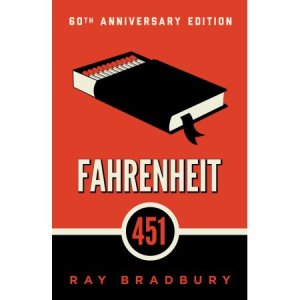 Fahrenheit 451 by Ray Bradbury is a story about banned books and thoughts. People in that society are wholly brainwashed by the government into believing that no reading and thinking can bring them happiness. Montag, one of the firemen responsible for burning books, is curious about them. This leads him to read and think, which are illegal in his society. After realizing the lack of literature and thoughts necessitates the lack of happiness and love in the world, Montag begins to take actions, often rashly, to rebel against the reality. Although Montag’s rashness occasionally hinders him from achieving his goals, his braveness also helps him rebel and builds a human character. His imperfection adds a touch of realism to the story, making it more understandable to readers. (more…)

Macbeth: Movie Poster Project
By Kristy Chen, III Form
Macbeth: Movie Poster Project

Act 1, Scene 3, Lines 157-159,
“If chance will have me king, why, chance may crown me Without my stir.”
Act 2, Scene 1, Lines 44-61,
“Is this a dagger which I see before me, The handle toward my hand?”
Act 3, Scene 2, Lines 25-29,
“Duncan is in his grave. After life’s fitful fever he sleeps well. Treason has done his worst; nor steel nor poison, Malice domestic, foreign levy, nothing Can touch him further.”
Artist’s Statement:
The illustration on the movie poster portrays Macbeth holding a dagger dripping with blood. Lady Macbeth’s face appears over Macbeth, who wears a bloody crown. Macbeth is the (more…)

Reflection on Wedding of Zein by Tayeb Salih
By Lora Xie, IV Form
Reflection on Wedding of Zein by Tayeb Salih
Both Haneen and the Imam are important religious leaders in the village’s spiritual life. 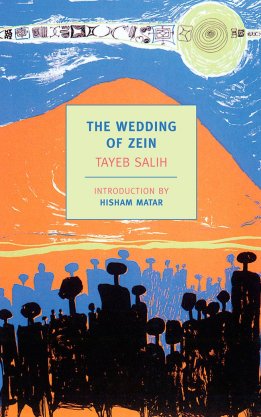 While Haneen, a Sufi master, represents the mystery of Islam, the Imam represents the traditions and doctrines of Islam. However, both of them bring God into the village life.
Haneen enjoys unanimous respect from the villagers because he is ascetic, enigmatic, and accredited with the year’s miracles, the most prominent of which being stopping Zein from killing Seif ad-Din and turning Seif ad-Din from a wastrel to a pious Muslim. Haneen also correctly prophesied Zein’s marriage with “the best girl in the village” (64). The marvels’ magic cause even the secular people, such as the “gang,” to admire in awe. Through his unpredictable, spectacular, and uplifting miracles, Haneen gives the humdrum village life a heart-warming magnificence that can derive from nothing but a loving and powerful superior. He strengthens people’s awareness, appreciation, and awe for God by becoming a vessel for the higher power’s love and greatness himself. (more…)

An Argument for Utilitarianism: Omelas
By Jenny Tang, IV Form
An Argument for Utilitarianism: Omelas

Blade Runner: A Bipolar Fantasy
By Mo Liu, VI Form
Blade Runner: A Bipolar Fantasy
Introduction
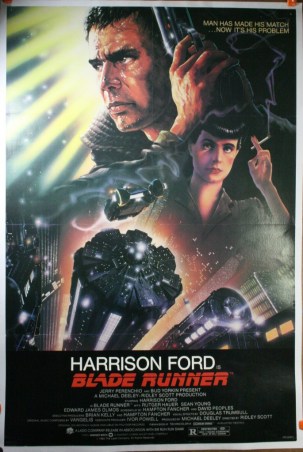 When Ridley Scott released his original Blade Runner in June 1982, the United States had just arrived at another peak of tension with the Soviet Union. Ronald Reagan had recently become President, and he denounced the policy of detente that previously dominated the U.S. foreign relations approach and wanted to re-establish the United States’ fierce international appearance. Reagan devised an ambitious plan to actively contain communism that historians would later refer to as “Reagan’s Second Cold War,” in which he called for an overt attempt to destruct the Soviet Union. After a short time-out, Americans once again found themselves in the war of tug with the Soviets, watching out for Soviet spies and waiting for the siren to alarm them of an approaching nuclear warhead. (more…)


 LEO
LEO 