
Home » Posts tagged 'American history'
Tag Archives: American history
Transpacific Scholars: A Journey Through the Boxer Indemnity Scholarship
By Daniel Guo, Class of 2024
Editor’s Note: The George Hill Burnett History Prize is given to commemorate the graduation in 1902 of a grandson of the founder. It is awarded on the basis of a special essay in American history.
Introduction
Over the past two decades, the number of Chinese students in the United States has seen a remarkable surge, growing from a modest original number of around 20,000 students in 1991 to an enormous student body of more than 300,000 in 2021.1 Since 2009, Chinese students have consistently represented the highest portion of international students, making up nearly a third of all international students in American colleges and universities.2 These Chinese students choose to pursue a wide range of subjects and academic disciplines such as engineering, English, and law in the many different educational institutions that the United States offers, including prestigious universities such as Harvard and Yale. However, due to recent geopolitical tensions between China and the United States, the drive for Chinese students to study in the United States has diminished, with many turning to other prestigious schools in the United Kingdom and Europe instead.3
This shift away from Chinese students in the United States is not just unique to the Chinese perspective: a Pew Research Center survey indicates that 55%, a majority of Americans surveyed, support limiting Chinese students studying in the United States. One in five Americans strongly supports limiting Chinese students in the United States. This situation is seemingly targeted specifically towards Chinese students, as the majority of Americans view international students favorably, with 80% of Americans expressing a positive opinion towards them.4
As the current educational relationship between Chinese students and America has become a focal point for geopolitical issues and debates, it is essential to revisit the history of these students in the United States—starting from the earliest Chinese Educational Mission to the eventual formation of the Boxer Indemnity Scholarship, which served as the earliest, complete educational mission of Chinese students in the United States. This paper analyzes the historical development of the Boxer Indemnity Scholarship, which ran from 1909-1929, examining how it transformed from a reparations payment into a significant educational exchange program, and assesses its long-term impact on Chinese development, including the Chinese military, government, and education.
The first section of the paper provides essential context to the history of Chinese educational missions in the United States. Before the Boxer Rebellion, the very first instance of Chinese students studying in the United States was the Chinese Educational Mission led by Yung Wing. However, concerns about the students losing their Chinese identities and becoming too American led to the premature termination of their mission.5 Shortly After, the Boxer Rebellion erupted, and following its suppression by the Eight-Nation Alliance, the Qing government was forced to pay all participating nations a series of indemnities. Considering these indemnities excessive, the United States decided to return the excess funds as an educational fund to promote friendship with China, thus giving rise to the Boxer Indemnity Scholarship.6
The following section of the paper goes into detail on the perspectives of the scholarship, focusing on the daily lives and personal opinions of students during their time studying in the United States. Aside from the purely educational and professional trajectories of these students, many of these students were involved in a series of extracurricular activities and organizations. 7 This section of the paper utilizes a set of New York Times articles as well as monthly Chinese student publications to provide a complete, primary source of both the Chinese and American perspectives on the Boxer Indemnity Scholarship. The final section of the paper analyzes the students who participated in the Boxer Indemnity Scholarship through a wide variety of sources and tools. Data analysis was conducted with ChatGPT using a book titled Who’s Who of American Returned Students, which contains records of the students who studied in the United States during this period, including both the Chinese Educational Mission and the Boxer Indemnity Scholarship.8 This section dives into an analysis of the students’ birthplaces, educational backgrounds, future career destinations, and occupations, as well as other important venues of information. By providing a comprehensive image of the students who benefited from the Boxer Indemnity Scholarship, this study can gain valuable insights and knowledge of its success or failure and how it relates to the current global landscape.
(more…)Landmark Redistricting Cases in the Supreme Court and their Influence on U.S. Electoral Equality
By Steven Yang
Landmark Redistricting Cases in the Supreme Court and their Influence on U.S. Electoral Equality
Editor’s Note: This paper was completed as a part of the History Research Fellowship, a one-semester course available to sixth form students.
Student-Submitted Note: This paper was completed as part of the VI Form History Fellowship class, and focuses on the history of the Supreme Court’s involvement in redistricting, the process by which areas are broken up into political districts for each representative to serve. It starts with a summary of the parts of the Constitution pertinent to understand the topic, then chronologically understands the history of redistricting in the context of Supreme Court cases.
The Constitution of the United States begins with “We the People,” a famous phrase expressing the democratic principles of equality and power derived from the people; yet, there lies a dissonance between these principles and contemporary American politics, particularly within elections. Electoral laws can greatly influence results; controversial practices like strict voter ID laws and eliminating the ability to vote early or use mail-in ballots can lower voter turnout and heavily sway elections. One of the most egregious examples of these democratic principles, however, is called gerrymandering. Because state legislatures are tasked by the Constitution to draw districts elected officials represent, politicians can “entrench” themselves in office by drawing maps favorable to them. The process of drawing these districts on a decennial basis is known as redistricting, and redistricting that is aimed to benefit a certain group of people is called gerrymandering. While the most common form of modern gerrymandering is partisan gerrymandering, where politicians draw maps to benefit their party, other types of gerrymandering like racial gerrymandering have occurred in the past.3 At its worst, gerrymandering can be the equivalent of rigging elections. An antithesis to the core democratic principles the United States was built upon, gerrymandering is a flagrant violation of democracy so widespread that it has become synonymous with American life.
Legal challenges to unfair redistricting began in the 1940s, and redistricting has been a routine issue for the court to address up to the modern day. Many cases escalated to the Supreme Court, whose rulings on redistricting can have momentous effects. Early cases through the 1960s largely focused on malapportionment, a form of unfair redistricting where some voter’s voices are diluted because they live in political districts that were much larger in population than others. The court was generally willing to impose more requirements of redistricted maps to ensure equality, like mandating political districts must be roughly the same population. The 1980s to 2000s saw the court rule on other types of unfair redistricting, notably racial and partisan gerrymandering. However, when encountering questions of partisan gerrymandering, partisan bias of the court became increasingly evident. Combined with increased political polarization, the makeup of the consistently conservative courts during at the turn of the 21st century quickly became overwhelmingly partisan, favoring the Republicans who appointed justices in their roles. This represented a drastic departure from precedent and from democratic values as a whole. The court’s decisions are monumental, and by essentially deregulating partisan gerrymandering in recent cases, gerrymandering has become even more widespread than before.
This paper explores the history of redistricting and gerrymandering chronologically, starting with clauses and amendments within the U.S. Constitution that are vital to understanding the abundant litigation that occurred later. Next, it examines the United States’ approach to solving the issue of apportionment; a closely related issue to redistricting that determines how many Congressional representatives each state receives. Finally, the history of apportionment is contrasted with redistricting, answering the question: why can’t a similar solution be found for redistricting?
(more…)The Shen Prize: The Ongoing Struggle Against the Corrupting Influence of Money in Politics
By Alden Mehta, V Form
The Shen Speech Prize: The Ongoing Struggle Against the Corrupting Influence of Money in Politics
THE SHEN PRIZE is awarded to the winner of a public speaking contest among Advanced Placement United States History students on the topic of democracy. The prize is given by Y.L. Shen in honor of his daughters, Ing-ie (Ava) Shen of the Class of 1988 and Ing-Chuan (Judy) Shen of the Class of 1989.
Is it possible for influence in American politics to be bought? The answer is yes. In theory, a true democracy adequately represents the voice of its people, showing no bias towards status, identity, or wealth. We should see this representation reflected in the profiles of the politicians elected through the democratic process. However, in the US, political candidates rely on generous contributions from the wealthy to fund increasingly expensive campaign efforts. Through these contributions, the rich gain a degree of undue influence in politics; instead of reflecting the concerns of their electoral bases and amplifying the voices of the general public, we see politicians prioritizing the interests of their biggest donors. Campaign funding, rather than public interest, drives their work. This hole in American democracy led to the enactment of the Federal Election Campaign Act (FECA), authored by Senator John Pastore (D-RI), in 1974. FECA sought to remove the corrupting influence of money from politics. Ultimately, FECA did not eliminate the importance of money in politics, but was still an expansion of democracy in the US because it set a lasting standard for campaign spending and contributions and increased government regulation in order to limit the influence of money in politics.
(more…)
Shen Prize Winner “Women in World War II: Women’s Army Corps to Second Wave Feminist Movement”
By Cadence Summers, VI Form
Women in World War II: Women’s Army Corps to Second Wave Feminist Movement
Editor’s Note: The Shen Prize is a speech competition for V Formers responding to the prompt: What is a moment of significant expansion or contraction of United States’ democracy? The 2020 recipient of the Shen Prize was Catie Summers.
“For all the girls in the [Women’s Auxiliary Ferrying Squadrons], I think the most concrete moment of happiness came at our first review. Suddenly and for the first time, we felt a part of something larger. Because of our uniforms, which we had earned, we were marching with the men, marching with all the freedom-loving people in the world.” This is an excerpt from the poem At Twilight’s Last Gleaming, written by Cornelia Fort, one of the first woman pilots in the United States.
During World War II, the United States government drafted as many male soldiers as possible. Although thousands were automatically selected, just as many were needed to stay on the homefront to support the war effort through non-combat roles, which prompted the government to replace men in the workforce with women. During wartime, women’s employment rate increased 25%, and over 350,000 women served in the U.S. military. This increase in women’s employment and the diversification of jobs available to them is an expansion of American democracy. American democracy is fluid, ever-changing, and situational. As the country adapts and advances, so too does its democracy. These fluctuations occur in time with shifts in political climates thus the inclusivity and definition of American democracy at a given time correlates to the status of the country at that time. The introduction of the Women’s Army Corps, also known as WAC, during World War II represents an expansion of American Democracy due to the situational requirements of a nation at war. This expansion not only gave women the option to support the war effort by taking on traditionally male roles in the workforce and military, but also for the duration of the war, granted these women access to a society in which their work and contributions outside of the home were as valued as those within it.
(more…)
Yin and Yang: The Interdependence of Dr. Martin Luther King Jr. and Malcolm X
By Isabelle Titcomb, VI Form
Yin and Yang: The Interdependence of Dr. Martin Luther King Jr. and Malcolm X
Sixth form Isabelle Titcomb spent a semester this year in History Fellowship class conducting research on the relationship between MLK and Malcolm X — two of the most influential leaders in African American history whose words still have a lingering influence.

The Reach for Perfection in the Jacksonian Era
By Matthew Gates, V Form
The Reach for Perfection in the Jacksonian Era
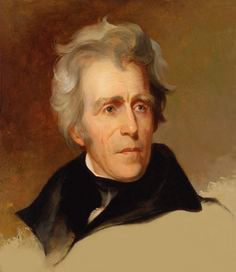 Although Andrew Jackson, the seventh President of The United States, only held office from 1829 to 1837, he made a profound impact on American history. During “The Jacksonian Era,” (1816-1841) the economy boomed, technology advanced, American borders expanded, but most importantly, the common man gained a sense of importance, and American optimism and patriotism were “unbounded” and “infectious” (Remini 108). It was a time of “passionate commitment to democracy” (Remini 122).
In response to the boom in the economy and the growth of industry and materialism in America during the Jacksonian Era, the theme of Culture and Society is evident throughout the Transcendental Movement. This movement, which originated in Massachusetts, emphasized the divinity of man and his connections to God and stressed the beauty in nature in a society preoccupied with materialism. Transcendentalists such as Henry David Thoreau and Ralph Waldo Emerson encouraged Americans to live more modestly and enjoy the simplicity of nature. Emerson referred to the growing obsession of the American people to gain wealth as “‘the demon of reform,’” thereby proving that the emergence of the Transcendental Movement was necessary to respond to the expansion of American industrialism and materialism (Remini 73). Even today, there are still Transcendentalists who believe in the importance of living humbly and recognizing the beauty in nature in daily life. (more…)

What to Do with Confederate Monuments
By Matt Walsh, V Form
What to Do with Confederate Monuments
Despite the meteoric rise of clickbait fake news, the majority of “alternative facts” don’t come from shady fake news websites. Rather, they come from our distorted perception of American history. I only had to read one chapter of Dr. James Loewen’s Lies My Teacher Told Me, a book that sheds light on the dishonesty of American history textbooks, to realize the problems with American history education. Lauded by the likes of Howard Zinn and Jon Wiener, Lies My Teacher Told Me provides a thorough examination of the lies promulgated by American history textbooks.
Dr. James Loewen, who holds a Ph.D. in sociology from Harvard University and taught at the University of Vermont and Mississippi’s Tougaloo College, came to visit St. Mark’s in October of 2017. Dr. Loewen’s talk to the St. Mark’s faculty and student body regarded the danger of misconceptions of the past and centered on the problems with Civil War monuments honoring Confederate generals. Loewen asserted that the construction of these statues—often in veneration of Robert E. Lee or Jefferson Davis—represent what he calls a “nadir” in racial equality in the United States. (more…)
Memorialization, Memory, and the Civil War
By Joseph Lyons, IV Form
Memorialization, Memory, and the Civil War:
The Evolution of Civil War Memory through the Monuments of North Carolina and Maine
Introduction:
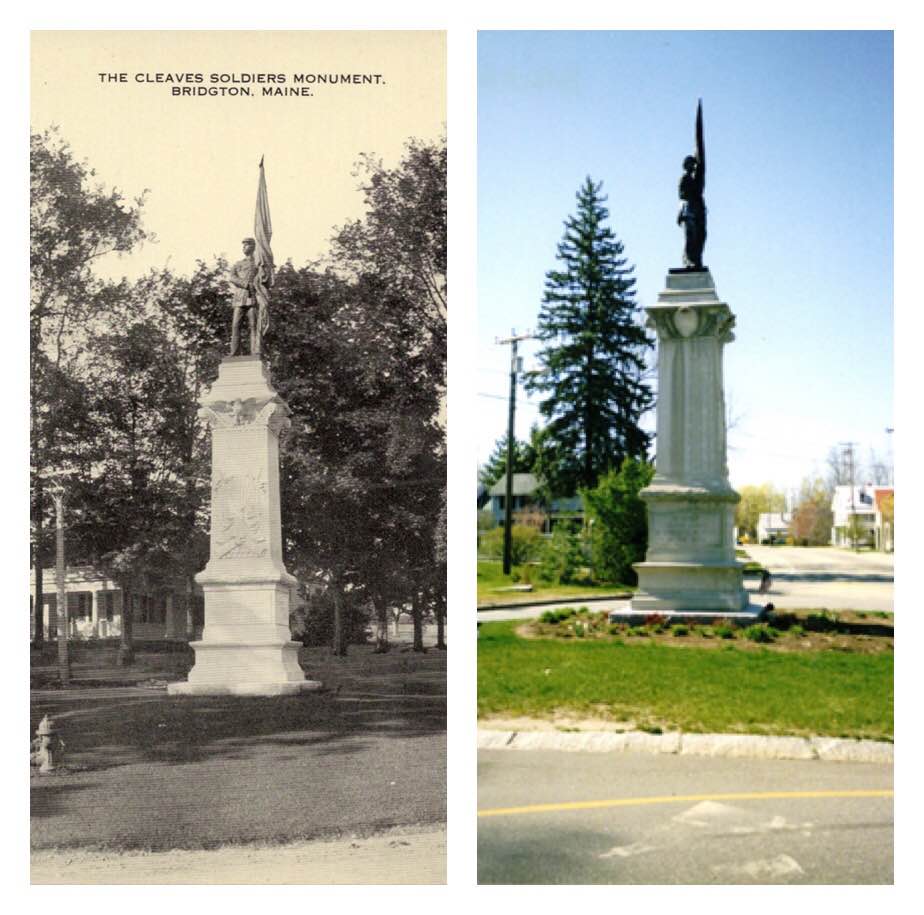 Driving up the hill from downtown Bridgton, Maine, one sees a towering Civil War monument looming on the horizon. The monument itself is unremarkable, as there are at least 144 other Civil War memorials in the state. Given the imprint that this conflict left on America’s collective memory, the prolific memorial-building efforts in Maine are no surprise. However, the way Maine memorials portray the conflict is rather puzzling. Despite the fact that the Union fought the war, at least in part, for emancipation and racial equality, Mainers constructed monuments, like the one in Bridgton, that largely disregarded the significance of slavery to the conflict. The inscription on the Bridgton monument reads: (more…)


 LEO
LEO 