
Home » 6th Season (Page 7)
Category Archives: 6th Season

Spoke’n Revolutions: Bikes, Water, and Soul 2018
By Truman Chamberlin, V Form
Bikes, Water, and Soul 2018
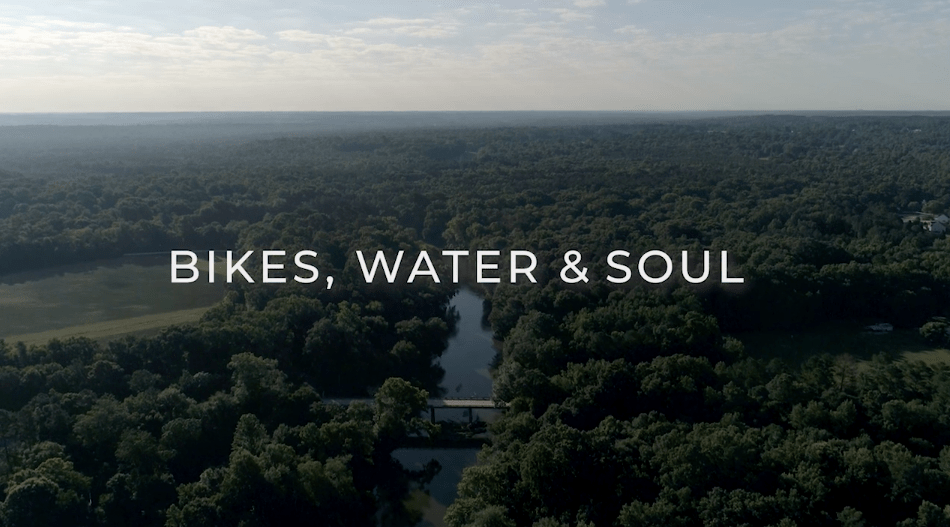
Click on Image for Video Chronicle of the Event.
As we transition into the cold and gloomy winters of New England, we cannot help but think about the warmth of summer. Naturally, for teenagers, the hallmark of summer is summer vacation. When I go through the “God-I-wish-it-were-summer” time, my mind immediately wanders back to the 750-mile bike trip I went on in July. Eleven riders ranging from ages fourteen to seventeen, three adult leaders, and two support van drivers all took a step away from their mundane lives and embarked on a week-long journey through North Carolina. This unforgettable trip was a transcendent experience in my life.
(more…)

Brownies, Icing, M&M’s, and Calculus
By Colin Capenito, Jack Eames, Boyd Hall, Lennon Isaac, and Kerrie Verbeek, VI Form
Brownies, Icing, M&M’s, and Calculus
Step by step, movement by movement, the task became a disaster. The lack of clarity in unison with a rudimentary understanding of an instructional lexicon, allowed only a few to complete the task at hand. It is not often that you are asked to create a dessert while following instructions verbatim, especially in calculus class. In efforts to shine a light on the importance of communication in calculus, Ms.McBride’s Advanced Calculus class was tasked with the job of creating an instruction sheet to make a brownie that was cut in half and covered in icing, then to have a member of the class follow the instructions in the most literal way possible. After almost every group failed, the message became clear: clarity is paramount in calculus. Like making an intricate dessert by hand, effective communication is paramount in the realm of calculus. One must be able to inscribe their thought process on paper as they surmount difficult problems not only to prove the legitimacy of their work but to show their reader a fully translatable math problem. (more…)

The Apple Does Not Fall Far From The Tree: On Cisneros’ “The Family of Little Feet”
By Grace Kingsbury, V Form
The Apple Does Not Fall Far From The Tree: On Cisneros’ “The Family of Little Feet”
Everyone has heard the saying, “the apple does not fall far from the tree,” but is there any truth to it? In “The Family of Little Feet” from The House On Mango Street, Esperanza plays a game of dress-up with her friends, Rachel and Lucy. They are given old high heeled shoes and strut around Mango Street, flaunting their beautiful shoes and long legs. The three girls are catcalled by many older men in the neighborhood, but they enjoy the attention. In the short story “Girl,” the girl is taught of chores that are expected of young women by her mother. Her mother stresses the importance of maintaining a positive reputation and looks down on promiscuity. Due to the differences in their upbringing, Esperanza expresses her sexuality whereas the girl suppresses hers as seen in their prominent accepted hobbies, varying feedback, and female role models. (more…)

A Journey to My Own Version of Christopher Boone’s London
By Angela Li, VI Form
A Journey to My Own Version of Christopher Boone’s London
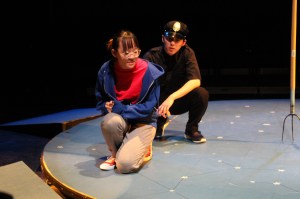 The ground spun, quite literally, on wheels beneath my feet as I looked into Siobhan’s eyes. In those few hours, this rotating stage made from plywood was not just a platform, it was a house, a classroom, and a train station. And at this moment I was not myself—I was Christopher Boone, a young man who had overcome the confines of his known reality and broadened his horizons by finding his way to London. This was the last scene in the school play, The Curious Incident of the Dog in the Night-Time, the denouement. The plywood creaked slightly under our weight, and the lights dimmed to allow glow-in-the-dark stars to shine and illuminate the final moments of this chapter. As Christopher reflected on his adventures, I saw how I had made my own journey of growth through theater. (more…)
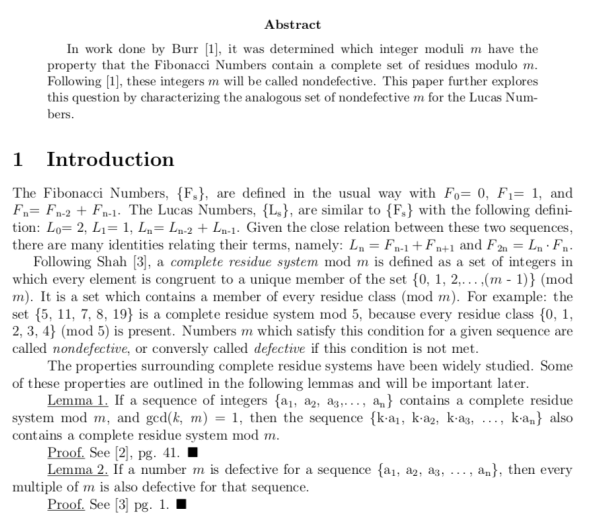
Lucas Numbers in Modulo m
Burgeoning Singer-Songwriter with Two Original Songs
By Caitlin Lochhead, VI Form
Burgeoning Singer-Songwriter with Two Original Songs
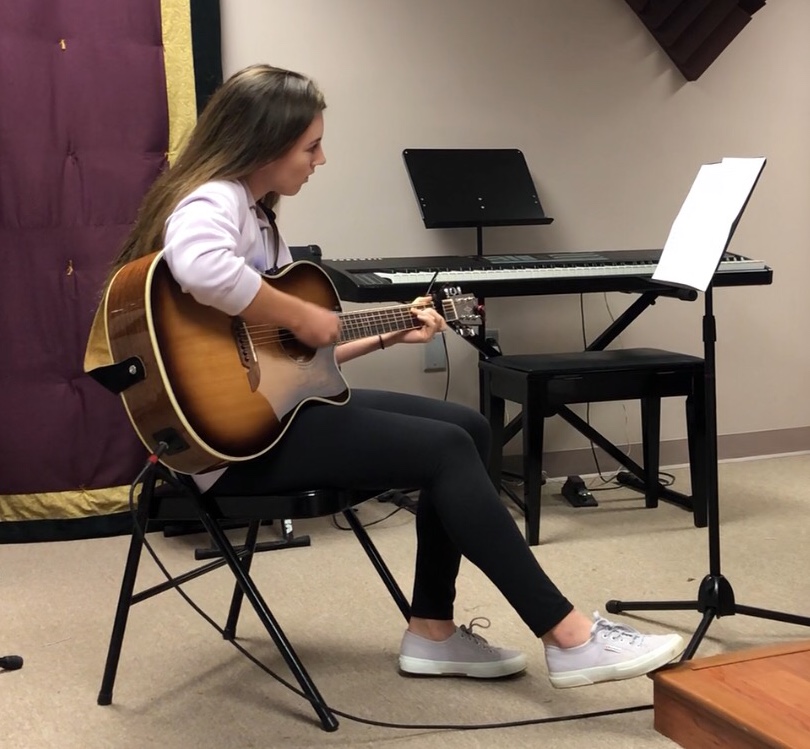
Utilizing the Class of ’68 Fifth Form Fellowship, over the summer Cait took songwriting lessons at Encore Music Academy in Millis, MA and recorded two original songs at Encore in Franklin. She wrote both songs: “Now We’re Done” unassisted and “Young” with the help of Brian Dollaway, a former guitar teacher of hers with whom she took songwriting lessons.
Click on the songs to listen!

Referred Pain: Societal Ailments Manifested as Individual Illnesses in Dystopian Literature
By Ms. Margaret Caron, English Faculty
Referred Pain: Societal Ailments Manifested as Individual Illnesses in Dystopian Literature
“Life is pain, highness. Anyone who says differently is selling something.”
- The Princess Bride
Perhaps life is indeed pain, as Goldman suggests, or perhaps life is only pain when a government’s control and society’s structure become so stifling and warped that its people develop pains and illnesses as a reflection of that government deterioration. The unbearable agony experienced by Westley in the Pit of Despair is not unlike the pain experienced by the residents of the Thieves’ Forest as they are unjustly forced out of their homes; Buttercup’s sorrow at hearing of Westley’s supposed death mirrors Florin’s morning when they hear news that their new princess has been killed; and Count Rugen’s six-fingered right hand embodies a distorted hand of justice. A corrupt prince, an abuse of power, and manipulative treason are made more palpable by a character’s singular screams and suffering.
This narrative tactic is evident in the novels of Atwood, Zamyatin, Abdel Aziz, and Ishiguro. The Handmaid’s Tale, The Queue, We, and Never Let Me Goshare similar authoritarian governments, sick characters, and broken social systems. Offred, Yehya, D-503, and Kathy are broken, ailing humans, but they are also members of irrevocably broken societies and authoritarian governing bodies. These characters’ illnesses are more than mere byproducts of broken government control and societal values. Rather, these dystopian societies with authoritarian governments posit characters’ physical ailments as representative of larger societal illnesses and failings. (more…)

自来 – From the Beginning
By Mei-Mei Arms, VI Form
自来 – From the Beginning
6,156 days ago, I was in an orphanage in China. 6,155 days ago, I met a family of three looking for number four. I didn’t know their language, nor they mine, and when they called me Mackenzie, I am told that I responded with looks of uninterested confusion. My older brother, Richard, who was six at the time, attempted Mandarin and called me his mèimei (little sister), I responded to the word, and with that, I got my name. The name’s meaning, to me, is fated, not to sound superstitious, but everyone in my family is the oldest. My mom’s the oldest of seven, my dad’s the oldest of three, my brother’s the oldest of two, and even our dog’s the oldest of nine. At first, my parents didn’t see it that way, they thought they’d call me Mei-Mei for a bit then switch to my legal name, Mackenzie, but here we are 6,155 days later, and it’s safe to say it’s not switching.
In elementary school, I loved being Mei-Mei, I thought it was cool to have a unique nickname, and in time, I grew to dislike ‘Mackenzie.’ I always dreaded roll calls when new teachers and substitutes said Mackenzie, resulting in either my saying ‘I go by Mei-Mei’ or another student annoyingly saying it for me. I was embarrassed that I had a “real name.” For years, I couldn’t wait to turn eighteen for the sole reason that being eighteen gave me the power to get rid of ‘Mackenzie’ because I’ve always thought it important that if you have the power to change something you don’t like, take action. However, I grew to understand that erasing Mackenzie wouldn’t solve my problems. (more…)


 LEO
LEO 