
Home » 5th Season (Page 7)
Category Archives: 5th Season
Self-Paced Learning in Latin III and III Honors
By Jeanna Cook and Dr. Heather Harwood, Classics Faculty
Self- Paced Learning in Latin III and III Honors
The Classics Department is trying something new this year: self-paced learning. We kicked off this departmental goal almost accidentally as we planned for separate courses in separate places this past summer. Dr. Heather Harwood was working on revamping the Latin III Honors course to better support students who continue with the language in Advanced Latin Readings thereafter. Jeanna Cook was looking for a way to restructure the Latin III course to better serve incoming students who place into Latin III. In our first department meeting of the year, we realized that we were attempting to solve different problems, but that we had designed curricula that pulled from the same methodology. Self-paced learning, assisted by the module structure in our LMS, Canvas, offered a common means by which we hoped that we could achieve our individual course goals. (more…)

The Pitch Project TV Show Winner: “The Second Reality”
By Summer Hornbostel, Pete Nugent, and Hailey DuBose, VI Form
The Pitch Project TV Show Winner: “The Second Reality”
Title: “The Second Reality”
Logline: If the first reality fails, there will always be the second one.
Elevator Pitch: “The Second Reality” is a show about alternate realities, and how the decisions that characters make affect their futures. If you think about it, every decision that we make can have multiple different outcomes, meaning that there are multiple different realities that we could possibly live out. In our show, “The Second Reality”, there is no such thing as one reality. You live one reality, but some people are given the chance to go back and change their biggest mistake, thus leading to their second reality. However, characters don’t know that they have the opportunity to go back, otherwise they might live their first reality without care. While living their second reality characters are able to remember their first one in order to justify it as actually being reality.
Synopsis: In our show, “The Second Reality”, we explore what it would be like to have the opportunity to go back and change our biggest mistake. In the show, we follow four stories of four different people going through various times in their lives. They have to deal with the everyday struggles in life that we do, but there’s one catch. They’re able to go back and change their biggest mistake. As soon as the characters make a mistake that negatively alters their own life and the lives of others, the universe (more…)

Studio I Art: Zoanthids and Coral
By Charlotte Bertsch, III Form
Studio I Art: Zoanthids and Coral
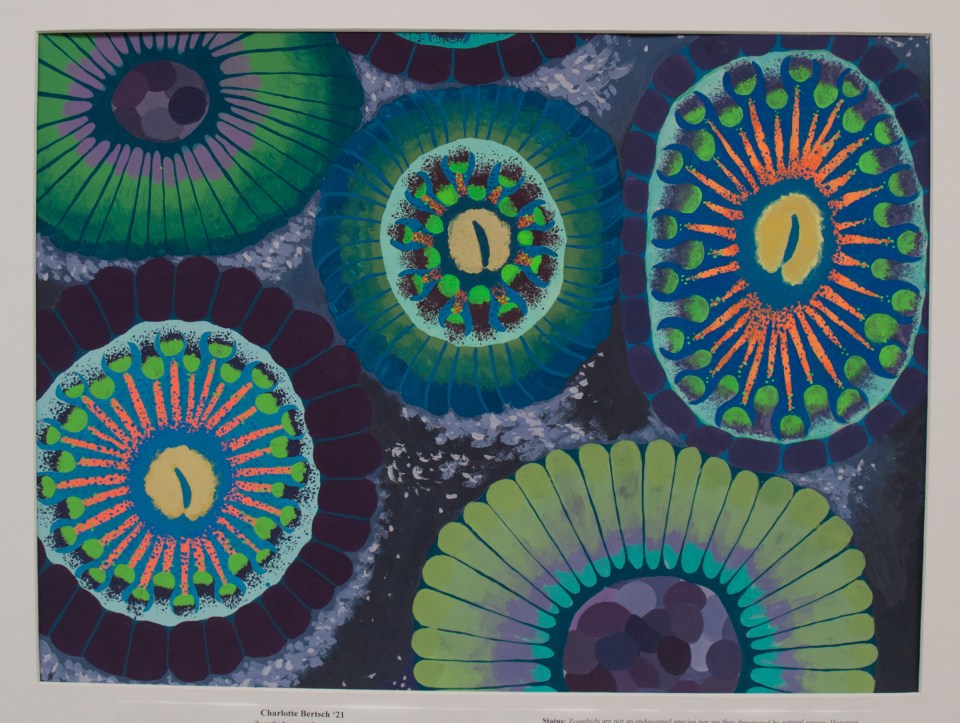
Zoanthids live on rocky and rubbly areas in flat intertidal zones. This particular kind of zoanthid, zoanthus sociatus, can be found on the highest part of the intertidal zone, which means that the coral is located in a middle ground between tide marks and is underwater during high tide and above water during low tide. The other kinds of zoanthids live on the upper levels in the lower surf zone, which indicates that they are located in the region where waves break. (more…)

What to Do with Confederate Monuments
By Matt Walsh, V Form
What to Do with Confederate Monuments
Despite the meteoric rise of clickbait fake news, the majority of “alternative facts” don’t come from shady fake news websites. Rather, they come from our distorted perception of American history. I only had to read one chapter of Dr. James Loewen’s Lies My Teacher Told Me, a book that sheds light on the dishonesty of American history textbooks, to realize the problems with American history education. Lauded by the likes of Howard Zinn and Jon Wiener, Lies My Teacher Told Me provides a thorough examination of the lies promulgated by American history textbooks.
Dr. James Loewen, who holds a Ph.D. in sociology from Harvard University and taught at the University of Vermont and Mississippi’s Tougaloo College, came to visit St. Mark’s in October of 2017. Dr. Loewen’s talk to the St. Mark’s faculty and student body regarded the danger of misconceptions of the past and centered on the problems with Civil War monuments honoring Confederate generals. Loewen asserted that the construction of these statues—often in veneration of Robert E. Lee or Jefferson Davis—represent what he calls a “nadir” in racial equality in the United States. (more…)

Memory of The Civil War Through Film
 The History Fellowship class began the unit studying the memorialization of the American Civil War. This unit ended with a final project that investigates a specific example of Civil War memorialization and its impact on society. I decided to explore the memorialization of American slavery and the Civil War by comparing the political and social undertones of the film Gone With The Wind (1939) and the film 12 Years A Slave (2013).
Prep School Youth Coalition for Health Opportunities Infographics: Bronchitis, Altitude Sickness, & Emphysema
By Nathan Laudani, Mary Flathers, and Danny Ciccarello
Prep School Youth Coalition for Health Opportunities Infographics: Bronchitis, Altitude Sickness, & Emphysema
Editor’s Note: In an effort to educate our community on common physiological conditions, the St. Mark’s chapter of the Prep School Youth Coalition for Health Opportunities (PSYCHO) is sponsoring an informational poster competition and invites submissions from all current Biology students. Poster submissions are to explain the science behind an ailment caused by a traumatic event. Posters will be assessed based on informational accuracy, detail, clarity, originality, and workmanship.
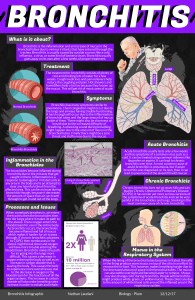
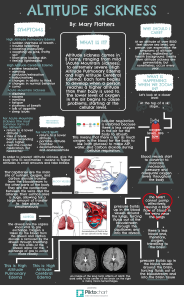
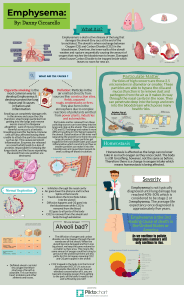
Please scroll down to see FULL and detailed infographics! (more…)

Quel rôle est-ce que la technologie joue dans la communication en 2017?
By Luc Cote, V Form
Quel rôle est-ce que la technologie joue dans la communication en 2017?
La technologie d’une génération définit comment chaque génération communique. Avant 1844 tout le monde communiquait en s’écrivant et en se parlant. En 1844, Samuel Morse a inventé le télégraphe. Pour la première fois, les gens pouvaient communiquer à tout le monde instantanément, le télégraphe a changé la façon dont les gens communiquaient. Tout le monde utilisait la nouvelle technologie de communication, c’était brilliant.
Mais, en 1876 Alexander Graham Belle a inventé le téléphone, et pour la première fois on pouvait écouter et parler en temps réel avec une personne loins de soi. Alors que la technologie facilitait la communication, la communication devenait moins officielle. (more…)
The Beauty of Carnatic Music
By Anishka Yerabothu, IV Form
The Beauty of Carnatic Music
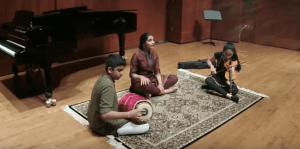
I was first drawn to Carnatic music when I heard a friend singing and I loved listening to the different songs and melodies.
In the words of Yehudi Menuhin, who is considered the greatest violinist of the 20th century, “I knew neither its nature nor its richness, but here, if anywhere, I found vindication of my conviction that India was the original source. The two scales of the West, major and minor, with the harmonic minors as variants, the half-dozen ancient Greek modes, were here submerged under modes and scales of (it seemed) inexhaustible variety.” Carnatic music is an intricate and complex classical music system from South India that dates back to the 12th century.
This music system is based on four core concepts: swaram, ragam, talam and sruthi. Swarams are solfa syllables sung much like the do-re-mi-fa-so-la-ti and do of Western music. A ragam is a scale that can have up to seven different swarams in various patterns. Talam is the rhythmic beat structure to which compositions are set and is maintained by the vocalist’s hand while singing. Sruti is the pitch at which one sings. This is maintained by the Tanpura, a stringed drone instrument. (more…)


 LEO
LEO 