Home » 2013 – 14 Academic Year (Page 11)
Category Archives: 2013 – 14 Academic Year
To Be Remembered Is To Live On: El Día De Los Muertos
by V Formers Erica Christensen, Camille Banson, and Brittany Andrea
The AP Spanish Language class was recently assigned a project for the Day of the Dead. The Day of the Dead is an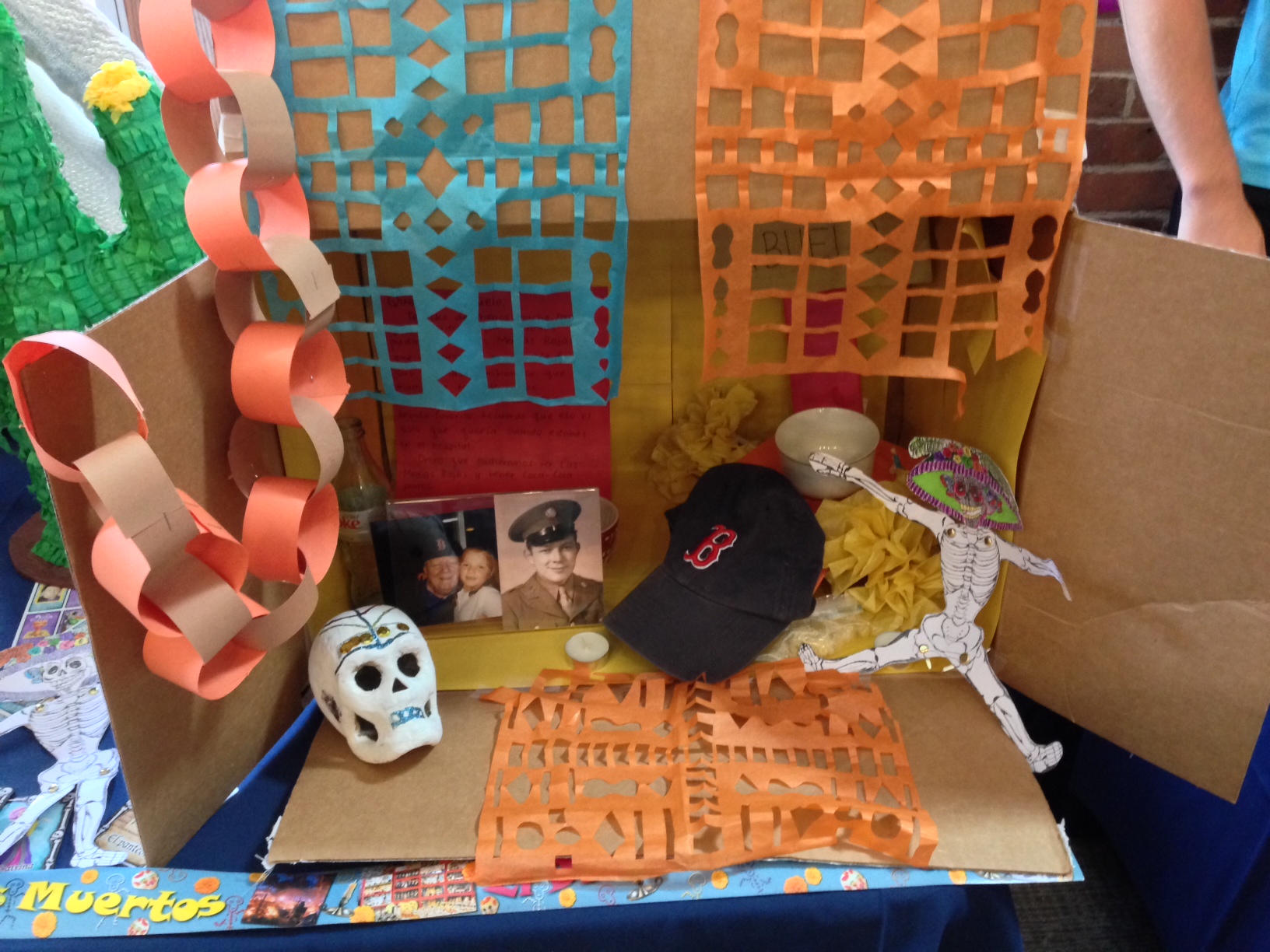 important holiday in Latin American culture, celebrated on November 2nd. During the holiday, Latin Americans remember and honor their lost loved ones. In their culture, the dead are kept in their memories and made an integral part of their lives. While such familiarity with the dead is contradictory to what we learn as children in the United States, the study of Spanish culture helps to improve our knowledge of the Spanish language. The students were assigned to make and dedicate a traditional Hispanic altar to someone close to them that had died. They were (more…)
iFortune
by Val Kessler, VI Form
Every coincidence is scientifically proven to be an outcome of probability. However, I do believe humans can interpret events into something meaningful. A given meaning will vary from person to person, depending on how he or she thinks and what is happening in his or her life at the moment of a coincidence. For instance, if someone is having a bad day and, as soon as the radio is turned on, a sad song plays, he or she may think of this as synchronicity, or the viewing of two events as connected, albeit they do not have a causal relationship and would not normally be related as meaningfully connected. Yet, if someone who was having a great day heard the sad song at the same time, also after (more…)
The Value of Office Hours
by Katharine Millet, History Department Head
As a freshman in college I had my first introduction to “Office Hours.” The concept was simple enough – each professor had an allotted time each week during which he or she would be sitting behind a large wooden desk in their book-lined office, waiting to receive any student who wished to stop in. The purpose was to give students the opportunity to get to know their professors and ask questions about the material covered in big lecture classes where time was at such a premium that few had a chance to speak at all, let alone compete against the hundred other kids with their hands up. (more…)
When “Critical Friends” Are Actually Appreciated
by Samantha Wilson, English Faculty
Who would ever want “critical friends”? Why would you willingly put your work out there when everyone could tear it apart? How could you listen as others discussed your lesson plan or assessment as if you weren’t even there?
These are just a few of the questions that might race through a teacher’s mind when faced with what are known as Critical Friends Groups, which bring anywhere from six to ten teachers together to critique and improve each other’s work on a regular basis using protocols. CFGs have been around since the mid-1990s and were first promoted by the (more…)
The “Toy” World of St. Mark’s: Tilt-Shifting Effect
by The New Media Class of Mr. Christopher Roche, Computer Science and Physics Faculty
The New Media class (a computer science elective) at St. Mark’s explores digital design and desktop publishing 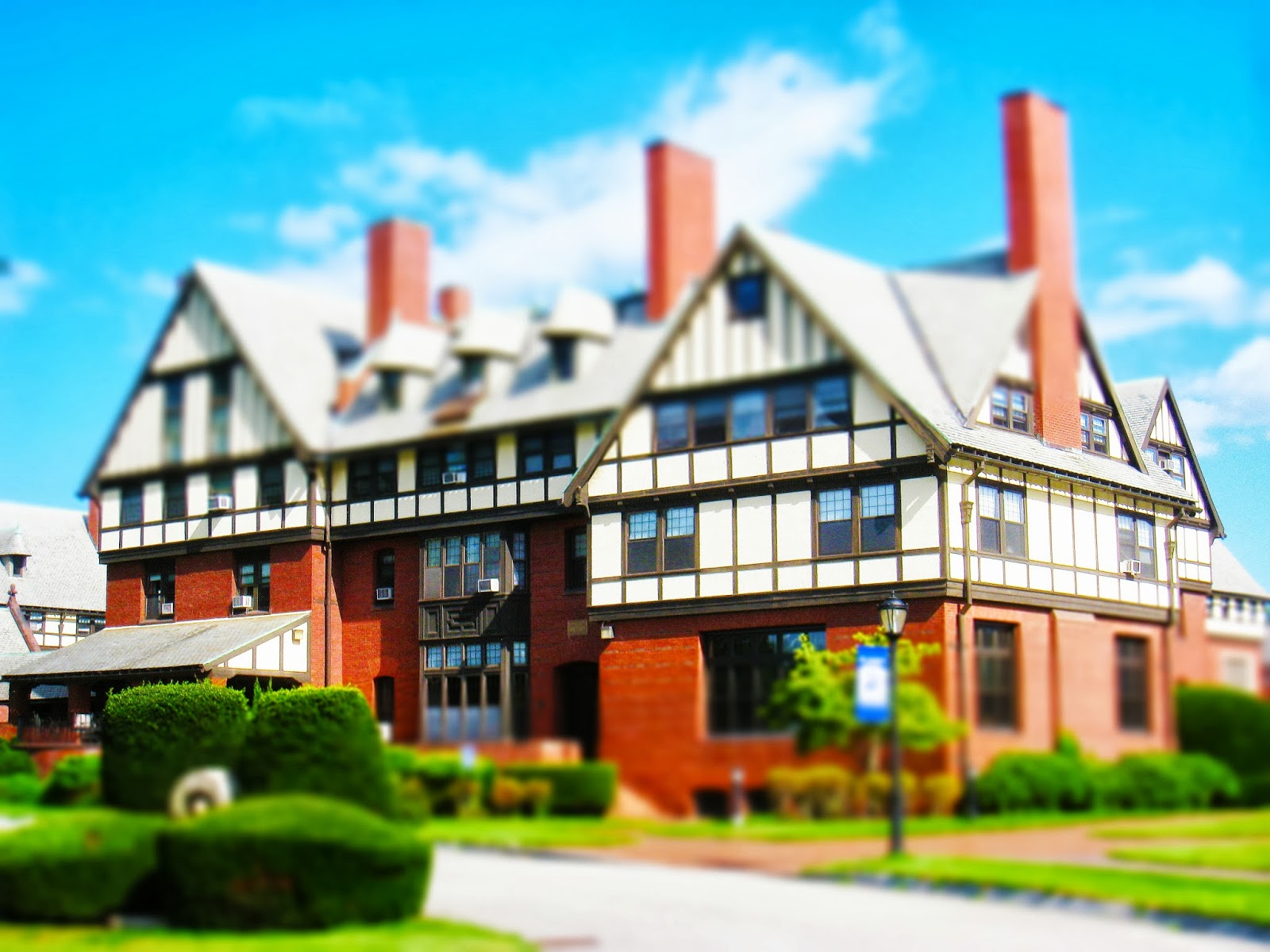 ideas, using 2D and 3D tools like Photoshop, Illustrator, and CAD software. The class seeks to show students the myriad possibilities of design in the digital world. Gabriel Xu, III Form, came to the second class this fall with an amazing image he found that showed the “tilt-shifting” effect (it was his response to a “favorite photo” assignment). When we saw the image, we were so excited to investigate tilt-shifting so we could learn how it works and practice it ourselves. (more…)
22 Hours Across the World
by Mame Kane, V Form
 Last summer, I participated in a new exchange program between St. Mark’s and St. Hilda’s School in Queensland, Australia. Dr. Warren, the head of the Global Citizenship Initiative, introduced me to the program. Dr. Warren taught my Third Form Seminar class in 2011-12, and she ignited my intrigue about the different parts of the world that we studied in that course. I expressed my interest to her about becoming more globally aware and competent, and she emailed me last September. I was asked if I wanted to (more…)
Learning How To Read, Again
by Finnegan Schick, VI Form
Can you remember what it was like to be illiterate? That was an individual dark age, sometime before your fifth or sixth birthday, which was filled with strange symbols: black and white icons sprawled across book pages, on shop windows, and on the sides of trucks. The world of words was the world of your parents, mysterious, silent…and agonizingly boring. Young Alice Liddell, just before her famous journey to Wonderland, asks herself, “What is the use of a book without pictures or conversations?” The answer, for young children, is simple. Such lackluster books, full of meaningless words and dry chapter-headings, are useless. (more…)
Math and Physics as Play
by Jacob Backon, Mathematics and Science Faculty
When I tell people that I teach physics and geometry they usually respond with a grimace or a sound usually reserved for the taste of something rotten. This is almost always followed up with some sort of admission of defeat at the hands of either or both of these subjects. Occasionally, someone will tell me they loved geometry but hated algebra as if the two were competing vacation locales. In many ways, this is like admitting that you love words but hate reading. It seems to me that many people’s opinions of math and physics are negative. (more…)


 LEO
LEO 