
Home » 10th Season (2022-2023) (Page 2)
Category Archives: 10th Season (2022-2023)
Social Media & Privacy: Why Should We Care?
By Anika Sukthankar, VI Form
Social Media & Privacy: Why Should We Care?
Editor’s Note: This project was made possible with the support of the Thomas H. Kean ’53 Fellowship. At their 25th Reunion in 1987, the Class of 1962 established the Thomas H. Kean ’53 Fellowship Program to honor Tom Kean, their teacher, advisor, mentor, and friend. The purpose of this fellowship is to enable students to explore important public policy topics and to embark upon exemplary lives of public service in the spirit of Governor Kean.
Student-Submitted Note: As part of the Kean Fellowship, I took a college-level course called STS 1101: Science, Technology, and Politics. We studied several scientific controversies to further explore the relationship shared between technology and politics, and understood the societal implications. My deliverable was to write a LEO article on what I have found and researched.
“Behavioral advertising generates profits by turning users into products, their activity into assets, their communities into targets, and social media platforms into weapons of mass manipulation.”
-Rohit Chopra in his 2019 dissent against Facebook
As technology evolves and becomes an integral part of our society, the controversies surrounding its proper use and associated governmental policies have become increasingly complicated. We are building complex socio-technical systems that seem to guide our very behaviors and thinking. From the addictive nature of social media to privacy concerns, governmental policies seem to be lagging technological advancements. Events, such as the Capitol hearings, have made this topic of great interest.
Social media has become incredibly popular in recent years, with over 400 million new users joining these platforms annually. Despite this popularity, the majority of users are uncomfortable with the collection of personal data and believe that the government needs to do more to regulate the tech companies. Rebuilding trust between users and the social media companies will take a triumvirate of public awareness, self-regulation by the social media companies themselves, and government regulations.
(more…)
Amyklaion Excavation
By Frank S. Ruperto, VI Form
Amyklaion Excavation
Editor’s Note: This project was made possible with the support of the Class of 1968 V Form Fellowship. At their 25th reunion, the Class of 1968 created a fund to provide grants to V Form students for independent study during the school year or, more commonly, during the summer between V and VI Forms. Their intent in establishing this fund was to reward independent thinking, ingenuity, and planning and to encourage the student in exploring non-traditional fields of inquiry or using non-traditional methods of investigation.
My experience at the Amyklaion Excavation program in Sparta, Greece, this past summer enabled me to bring the Classics to life. The Hellenic Education and Research Center offered the program, which consisted of an excavation, archaeological method and practice, on-site documentation and cataloging of artifacts, and Greek epigraphy.
Amkylaion is located in the southeastern Peloponnese region of Ancient Greece. The site was a ritualistic temple to Apollo and Hyacinthus. Our group sectioned it off into steps for the purposes of excavating and recording our findings in an organized manner. Some of the participants would work on a five-meter wall, using a pickaxe to loosen up the dirt. They would rummage through the loose dirt, shoveling the dirt off the wall. The person sifting through the dirt would separate out any artifacts. Others in our group would clean the newly discovered pieces, using only water and a toothbrush, before separating each piece into different sections by time period, which was determined based on both color and design. These artifacts would eventually go to the laboratory to be marked and recorded. By studying artifacts that were part of daily ancient Greek life, I strengthened my knowledge of Greek culture and my understanding of the ancient world.
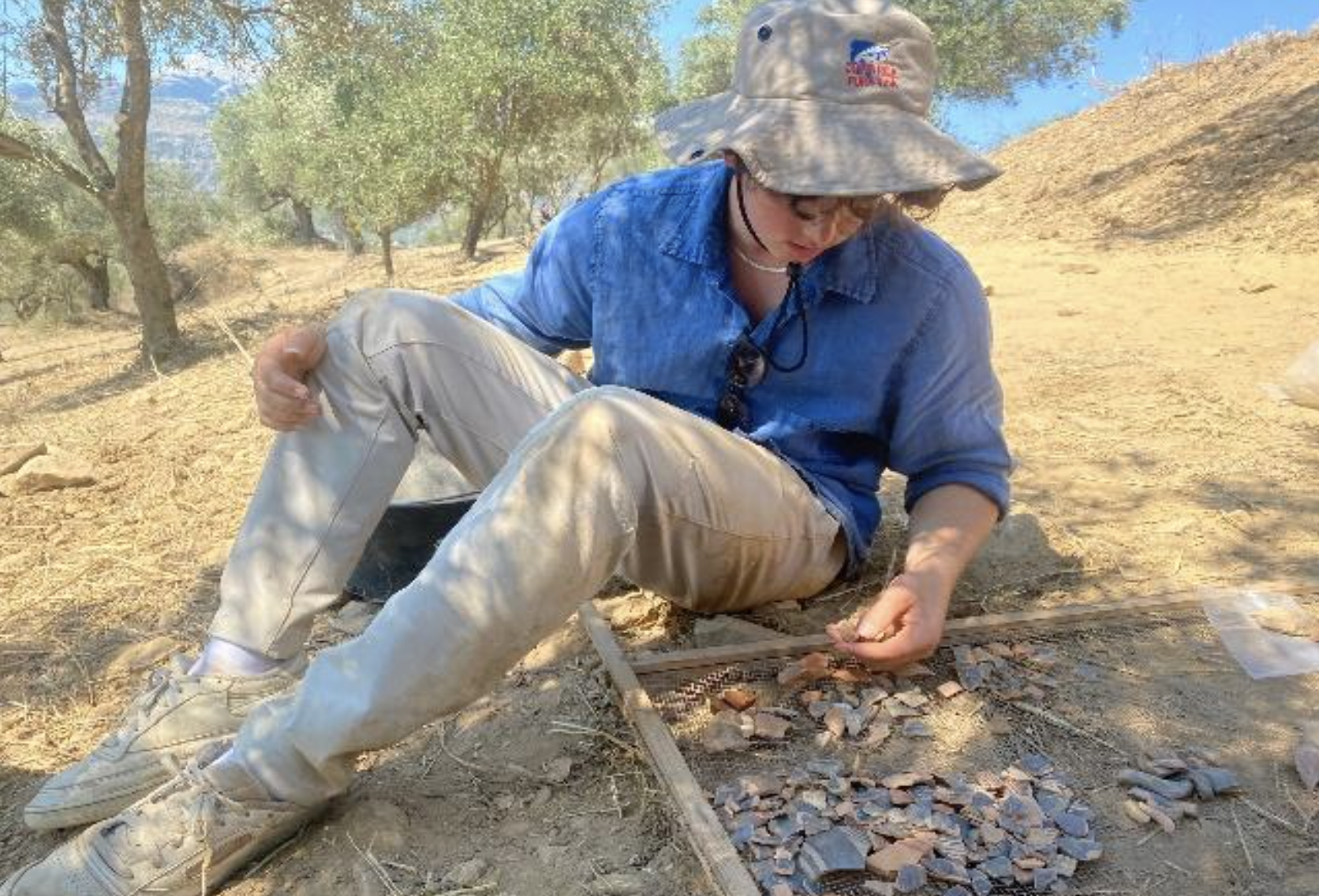
Figure 1: Sorting Artifacts Based Off Time Period
(more…)Teens without Screens
By Ryan Krantz, VI Form
Teens without Screens
Editor’s Note: This project was made possible with the support of the Class of 1968 V Form Fellowship. At their 25th reunion, the Class of 1968 created a fund to provide grants to V Form students for independent study during the school year or, more commonly, during the summer between V and VI Forms. Their intent in establishing this fund was to reward independent thinking, ingenuity, and planning and to encourage the student exploring non-traditional fields of inquiry or using non-traditional methods of investigation.
Student-Submitted Note: I was awarded this grant to take a surfing road trip down the East Coast, without my phone.
In a world where humans are becoming increasingly dependent on electronic devices in all aspects of our lives, adolescents are particularly susceptible to screen addiction. The average American teenager spends over seven hours a day on screens, which accounts for about 40% of our conscious realities. My friends and I realized that we too, are victims of the “screenager” epidemic, and we wanted to know what our lives would be like if we didn’t have phones. In the winter of my junior year, I received a grant from the Class of 1968 V Form Fellowship at St. Marks to take a road trip along the east coast without my phone. My two best friends Conor Sullivan and Toby Zeidenberg agreed to come along on the road trip, and so on August 11, 2022, we left our phones, computers, and all other screens behind and hit the road.
(more…)The Ely Speech Prize for The Global Seminar: Signature
By Divi Bhaireddy, III Form
The Ely Speech Prize for The Global Seminar: Signature
The Ely Prize in Public Speaking, originally given by a member of the Class of 1892 in memory of his mother, is presented to the student who gave the best speech in the Global Seminar Public Speaking Competition.
Someday in the future, I will be someone’s ancestor. People will tell stories about me; what I did with my life, what family I made, and the impact I left behind. Those people in the future won’t know how I laughed or how I smiled, my quirks or my chatter, but instead, they’ll know all that I did with my life. My name will be passed down, and how I decide the way my name is remembered, is all in my hands.
In the beginning of this school year, one of the first assignments we had in The Global Seminar was titled, “2.1 Our Names & Our Places in the World”. It was all about what our names meant and how it reflected our stories. And although we hadn’t chosen that name, it was still ours.
Our names were given to us by other people. Whether it be your mother or your father who gave it to you, your grandmother or your religion, it isn’t your choice. My name is Divi. My full name: Divija. It means born in heaven. And since I was a child, my name has been mispronounced when people first meet me because it isn’t one that they have encountered before. But, this year in TGS, we learned about Hinduism. How rich my culture is and how sacred our beliefs are. We learned about Samsara, which is a cycle of life ultimately to reach a state of Moksha; enlightenment. It helped me gain a deep appreciation for my name and all its uniqueness. And once I came to terms with my love for my name, it was time for the hard part: how I wanted that name to represent me.
(more…)The William Otis Smith Prize for English Verse: “blue break of dawn”
By Sophie Chiang, V Form
The William Otis Smith Prize for English Verse: “blue break of dawn”
The William Otis Smith Prize for English Verse is given in memory of a member of the Class of 1907 and is awarded to one student, who, in the judgment of the English Department, has submitted the outstanding verse during the past year.
“blue break of dawn”
no one ever crosses the cracked crosswalks
in the blue break of dawn. your mind flickers
into a sea-bloom of blue lights and credit cards,
of white powder and rolled-up dollar bills. you’ve
never been too cautious, these mannequins seem
to hold a gaze so intense it’s like you’re 17 and
speeding past red & blue flashes all over again.
you cry out and pick at your scalp, the one thing
holding together everything you’re made of,
the one thing you’ve ever been terrified to grasp.
there’s not much room to hold your new life next to
your mother’s faltering punch and your father’s
drunken breath. you wonder if this is universal. you
wonder if this is where it starts for people like you. you
wonder if that’s why when it matters, no one ever
crosses the concrete where you come from.
The Shen Prize: The Ongoing Struggle Against the Corrupting Influence of Money in Politics
By Alden Mehta, V Form
The Shen Speech Prize: The Ongoing Struggle Against the Corrupting Influence of Money in Politics
THE SHEN PRIZE is awarded to the winner of a public speaking contest among Advanced Placement United States History students on the topic of democracy. The prize is given by Y.L. Shen in honor of his daughters, Ing-ie (Ava) Shen of the Class of 1988 and Ing-Chuan (Judy) Shen of the Class of 1989.
Is it possible for influence in American politics to be bought? The answer is yes. In theory, a true democracy adequately represents the voice of its people, showing no bias towards status, identity, or wealth. We should see this representation reflected in the profiles of the politicians elected through the democratic process. However, in the US, political candidates rely on generous contributions from the wealthy to fund increasingly expensive campaign efforts. Through these contributions, the rich gain a degree of undue influence in politics; instead of reflecting the concerns of their electoral bases and amplifying the voices of the general public, we see politicians prioritizing the interests of their biggest donors. Campaign funding, rather than public interest, drives their work. This hole in American democracy led to the enactment of the Federal Election Campaign Act (FECA), authored by Senator John Pastore (D-RI), in 1974. FECA sought to remove the corrupting influence of money from politics. Ultimately, FECA did not eliminate the importance of money in politics, but was still an expansion of democracy in the US because it set a lasting standard for campaign spending and contributions and increased government regulation in order to limit the influence of money in politics.
(more…)The Coleman Prize in English: Is Atonement Always Attainable?
By Madison Hoang, V Form
The Coleman Prize in English: Is Atonement Always Attainable?
The Coleman Prize in English, endowed by Joseph G. Coleman Jr., Class of 1899, is awarded to that student, who, in the judgment of the English Department, has submitted the outstanding essay during this academic year.
“She [Briony] was calm as she considered what she had to do. Together, the note to her parents and the formal statement would take no time at all . . . She knew what was required of her. Not simply a letter, but a new draft, an atonement, and she was ready to begin. BT” (McEwan 321).
In a shocking conclusion to Part III of Atonement, author Ian McEwan inserts the initials “BT,” revealing the crucial fact that thus far, the whole novel had been a written retelling by none other than the novel’s protagonist herself, Briony Tallis. It is only after her confrontation with her victims, her sister Cecilia and childhood housekeeper Robbie, that Briony finally “begin[s]” her process of atonement. Readers soon realize that the narrative portrayed in Part III is entirely a product of Briony’s imagination; in reality, she never gets the chance to confront Robbie and Cecilia, and she never did write a “letter” or “formal statement” to begin her atonement. Instead, “a new draft” – alluding to the entire novel in of itself – shows how Briony’s role as a writer throughout earlier stages of her life is linked to her inability to face her wrongdoings. She thinks that an opportunity to retell her story is the only way for her to seek true atonement. As a writer, Briony grows by exploring new perspectives, experimenting with new stylistic devices, and developing her stories’ plots. As an adult, Briony also matures by becoming a more empathetic, accountable, and courageous figure, which ultimately allows her to attain atonement for her past wrongdoings.
(more…)George Hill Burnett History Prize: The Camp Fire Girls and the Appropriation of Native American Culture
By Marianne Lyons, Class of 2022
George Hill Burnett History Prize: The Camp Fire Girls and the Appropriation of Native American Culture
The George Hill Burnett History Prize is given to commemorate the graduation in 1902 of a grandson of the founder. It is awarded on the basis of a special essay in American history.
American camping associations are iconic. The camping movement from its inception and in all its forms has shaped American culture. In fact, I have had the privilege of attending Wyonegonic Camps in Denmark, Maine for the past ten years.
This past year as a counselor, I had the opportunity to pass down traditions directly to my campers. As part of this, I once took my cabin to my camp’s cramped museum, which holds the artifacts of Wyonegonic’s 120-year history. My campers humored me by asking questions about the different songs and pictures that covered the walls.
One of my campers paused as her hand hovered over a blurry, black and white picture. She called me over, and I studied the image. It was dated 1919 and showed a small white girl in Native American traditional dress. I paused. I thought hard about what to do and what to say next. Native American dress, lore, and appropriation are integral to the long history of the American camping movement. I didn’t know how to summarize and convey that history to my wide-eyed ten-year-old camper, but I knew I had to explain. I called my cabin over to the picture and opened up a conversation. I covered why this photograph might be offensive and encouraged the girls to share their perspectives. This conversation wasn’t easy, but it was important for my campers to understand the complexities of our shared history.
(more…)

 LEO
LEO 