
Home » 2019 (Page 9)
Yearly Archives: 2019

On Sherman Alexie’s “Clean, Cleaner, Cleanest”
By Cara Mulcahey, IV Form
On Sherman Alexie’s “Clean, Cleaner, Cleanest”
The short story “Clean, Cleaner, Cleanest” focuses on the grueling conditions motel maids face every day. It follows the
life of a motel maid named Marie who despises cleaning but does it for the money it provides. Marie gets physically assaulted by her coworkers, sees horrific sights in motel rooms, cleans revolting messes guest leave behind, and does not complain about the dehumanization she faces on a daily basis. Sherman Alexie, the author of “Clean, Cleaner, Cleanest,” utilizes Marie’s self vs. self-conflict about her job as a way to display the horrors motel maids face every day and why they should be appreciated in society.
Marie loathes being a hotel maid because cleaning repulses her and her coworkers have mistreated her. While she had gotten used to cleaning abhorrent bathrooms, making beds, and vacuuming, the idea of cleaning people’s leftover (more…)

Green Sea Turtle – Chelonia mydas & Marine Turtle Exhibition
By Cadence (Catie) Summers, IV Form
Green Sea Turtle – Chelonia mydas & Marine Turtle Exhibition

Green Sea Turtle – Chelonia mydas
Stage in Maturity – Adult (more…)

Reflections On The Lunar New Year
By Samantha Wang, IV Form, Helen Huang, V Form, Ryan Yang VI Form, and Thomas Li, III Form
Reflections On The Lunar New Year
Samantha Wang from Nanchang, China
The Lunar New Year, celebrated as the most important festival in many Asian communities all over the world, is coordinated by the cycles of the moon. It is at the beginning of a year, and the date varies every year.
As the most significant holiday in China, the Lunar New Year is traditionally the time for family reunion and to honor ancestors. In my hometown, people follow a series of traditions to celebrate this meaningful festival: first, we clean our homes and put up red decorations, a symbol of good luck in the Chinese culture. This tradition is based on the belief that cleaning the house at this time of year will “sweep away” accumulated bad luck from the past year. Cleaning also makes the house ready to let the good luck enter again. People celebrate in other ways, such as dressing in new clothes, visiting relatives, going to temples and praying to the Buddha, setting off firecrackers, giving out red envelopes, and honoring ancestors. (more…)

La Fille du Régiment and Experiencing an Opera
By Kendall Sommers, III Form
La Fille du Régiment and Experiencing an Opera
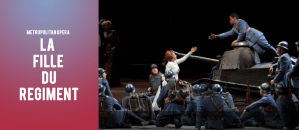
Gaetano Donizett wrote La Fille du Régiment, and it premiered at “Opera Comique” opera house in Paris in 1840. The two-act show first premiered at the Metropolitan Opera house in New York in 1902. It was the composer’s first show in French and became a huge success following its release. On February 11th, 2019, St. Markers attended La Fille du Régiment for the annual opera trip. The show follows a young woman, Marie, who grew up in the French army after being taken in by Sargent Sulpice. Leading with a background of her adoption and the climate in which she grew up in, one surrounded by men, viewers can understand her mannerisms and apparent personality. Opera-goers are introduced quickly to Marie’s love interest, Tonio, who is an Austrian that meets Marie by saving her life. The regiment is opposed to their courtship because he is an Austrian and an enemy to them, but Marie resists this fact. Traveling through the regiment’s campsite, a wealthy woman, the Marquise of Berkenfield, reveals that she is Marie’s aunt. She whisks Marie off to her Chateau to force manners onto her and guide her into an arranged marriage in order to salvage her family’s generational wealth. She demands that Marie leaves her lover and family, the regiment, behind. (more…)

Native Americans in the Western Film Genre: An Evolution
By Colin Capenito, VI Form
Native Americans in the Western Film Genre: An Evolution
Whether it be a science fiction film that brings us on a journey to a distant galaxy or a fantasy movie that introduces us to knights and dragons, films can show locations and characters that do not exist in reality. However, film also has the ability to inform us about our own world. Film can remind us of forgotten history, give us new perspectives on historical events, and familiarize us with cultures different from our own. Because of this, the accuracy of the history and cultures portrayed within movies is crucial; if a film is truthful in its depictions, we are more knowledgeable of, and can make better decisions about, the world.
While not all films in the western genre are based on true historical stories, they feature settings, themes, and groups that did exist in the past. One group often portrayed within the genre is Native Americans. There is a history of stereotyping Native Americans in popular culture. Carlos Cortés lists some of these stereotypes:
…antiwhite antagonists (usually villainous); as sexual threats and conveniences; as noble savages; as victims (often passive) of prejudice and discrimination; and as stalwart (sometimes antiracist) heroes.[1]
In the real world, Americans have mistreated Native Americans throughout history. However, Native American treatment has evolved over time. In the early twentieth century, the government wanted assimilation for Natives, working to mold them into Americans, which entailed Natives being forced to abandon their culture.[2] During the presidency of Franklin D. Roosevelt, the government made positive strides in terms of Native American treatment, though termination policies in the 1950s, which included the U.S. government being able to cease protection of Native tribes, undid some of these positive changes.[3] But, groups like the American Indian Movement (AIM) rose in the late 1960s and 70s, helping to bring about policy changes and spark awareness over Native rights.[4] (more…)

Exploring the Hudson River School and Its Relationship with the Conservation Movement
By Leean Li, VI Form
Exploring the Hudson River School and Its Relationship with the Conservation Movement
Introduction
American Pulitzer Prize Winner Wallace Stegner once said: “National parks were the best idea we ever had.”[1] But, where does the idea of building a park come from? Today, it seems instinctive for everyone to want to protect the earth. However, this sentiment was not instinctive. Now, we all know that conservation focuses on protecting natural resources and the environment, but in reality, the word “conservation” as an environmental concept did not exist until the early twentieth century.[2] This concept to preserve actually grew out of the nascent conservation movement of the early the twentieth century, when President Teddy Roosevelt protected millions of acres of land by sheltering it in the National Parks and National Forests systems.[3] However, this desire to preserve our environment did not appear in Roosevelt’s time without roots. In fact, events before the twentieth century laid the foundation for environmental conservation. The birth of the conservation concept actually began much earlier in the nineteenth century.
In the first half of the nineteenth century, the Industrial Revolution was at its height. The Revolution brought mass production and led people into more enjoyable lifestyles and increased consumption.[4] However, in the United States these changes had a very destructive impact on the environment.[5] Air and water pollution from coal-burning made cities like New York smoggy and dirty. Increased urbanization brought about increased water-borne diseases like cholera and typhoid. Moreover, hazardous materials released from factories devastated health conditions of working families who lived near industrial settings. The boom in transportation also led to serious land degradation. Canals affected the natural routing of water and streams while construction of railroads forced deforestation and destruction of certain animal habitats.[6] (more…)

How Surrealism Shattered Social and Artistic Conventions in the European Interwar Period
By Oliva Hammond, VI Form
How Surrealism Shattered Social and Artistic Conventions in the European Interwar Period
Introduction
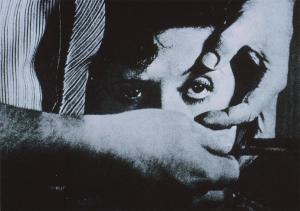
Creator: Dali, Salvador, 1904-; Date: 1929; Location: Spain
One of the most iconic Surrealist images is a single deep laceration into the eyeball of a subdued woman. It comes from Un Chien Andalou, a short movie by Salvador Dali and Luis Bunuel (Addendum 1).[2,3] The film exemplifies the horror and confusion that pervades Surrealism, but instead of employing it in a static painting, Dali and Bunuel prolong the enigmatic discomfort for over twenty minutes. Although the effect of the film may be horror, that was not its intent. Rather, the creators intended to forcefully open the minds of viewers to what they felt was the optimal perspective: the total loss of rationality and reason. Un Chien Andalou has many disturbing sequences of images, and, since it is a silent film, there is no explanation for the rapid changing in themes and characters.
In this movie, there are many unexplained phenomena that do not exist far outside the realm of our reality, but the film is still indecipherable when looked at with a traditional lens. This is the nature of Surrealism. In response to the turmoil of the First World War, there were certain groups that sought to change Western culture. These included the Dada artists, who created chaotic and unexplainable artwork, as well as avant-garde writers and musicians. Through their respective mediums, they took previous conventions and changed them to reflect the utter devastation that overcame Europe and made many question the rules of the existing order. Surrealists are perhaps the best-known example of a radical fringe group that worked toward the reversal of cultural norms during the interwar period. Just as in Un Chien Andalou, they coupled familiar concepts with disturbing alterations in order to provoke personal discomfort from their audiences. (more…)

The Presidential Bully Pulpit: Marijuana Policy and Rhetoric during the Nixon Administration
By Matt Walsh, VI Form
The Presidential Bully Pulpit: Marijuana Policy and Rhetoric during the Nixon Administration
I: Introduction
“The Nixon campaign in 1968, and the Nixon White House after that, had two enemies: the antiwar left and black people,” claimed John Ehrlichman, a Domestic Affairs Aide under President Nixon. He continued:
We knew we couldn’t make it illegal to be…against the war […], but by getting the public to associate the hippies with marijuana […], and then criminalizing [it] heavily, we could disrupt those communities. We could arrest their leaders. raid their homes, break up their meetings, and vilify them night after night on the evening news. Did we know we were lying about the drugs? Of course we did.[1]
By the time of Richard Nixon’s election in 1968, marijuana had become more than just a psychoactive substance. For users, it was a symbol of rebellion. For socially conservative politicians like Nixon, it posed a threat to civilized society. In his 1968 campaign, Nixon promised to restore law and order to a country where civil rights and anti-Vietnam War protests had become commonplace. As president, Nixon launched a War on Drugs, which included both a political and rhetorical crusade against marijuana. The drug symbolized the anti-war movement, so Nixon maintained a strict anti-marijuana stance to demonstrate his scorn for the movement. However, without the work of Harry Anslinger, the director of the Federal Bureau of Narcotics (FBN) from 1930 to 1962, marijuana may not have gained the political clout that it possesses today.
A substantial amount of marijuana first entered the United States when Mexicans fleeing the Mexican Revolution crossed the border into the American Southwest and brought marijuana with them. Even though one Texan senator claimed that “All Mexicans are crazy, and [marijuana] makes them crazy,” the first major piece of drug enforcement legislation—the Harrison Narcotics Act in 1914—did not outlaw marijuana.[2] Furthermore, a U.S. government committee formed in 1926 to investigate the smoking of marijuana by off-duty soldiers stationed at the Panama Canal found that the drug had no “appreciable deleterious influence on the individual using it.”[3] Only some western and southern states, where marijuana use by Mexican immigrants was more pronounced, criminalized the plant. (more…)


 LEO
LEO 