
Home » 2016 (Page 2)
Yearly Archives: 2016

La Crise des Réfugiés: Une Comparaison
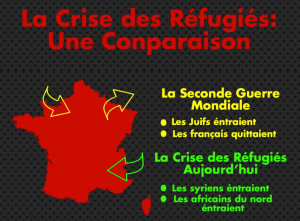 that makes a comparison between the refugee crisis during and after the second world war and the current crisis in 2016. You may identify some guiding questions of your own.”
The Future of Libraries and the St. Mark’s Library
By Coco Zephir, Head Librarian
The Future of Libraries and the St. Mark’s Library
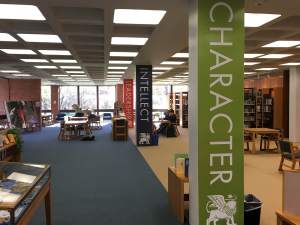 Libraries are ever changing in both form and function. One aspect currently at the center of library innovation is user-experience (UX). UX focuses on meeting the needs of patrons to improve their experiences by making them more impactful and meaningful. UX is a reiterative process that involves constant conversation with your community. Libraries using UX are implementing human-centered design, or design thinking, to better understand their patron base. Human-centered design, “focuses on defining and then resolving concerns by paying attention to the needs, aspirations, and wishes of people” (Peet 2016). (more…)

Get Well Soon: Dialogue in the Style of Hemingway’s “Hills Like White Elephants”
By Mei Mei Arms, IV Form
Get Well Soon: Dialogue in the Style of Hemingway’s “Hills Like White Elephants”
Editor’s Note: The purpose of this creative writing assignment in IV Form Writing Workshop was to build a better comprehension of implicit and explicit facts in writing pieces and to become acquainted with a specific creative writing style. Students chose to emulate the writing style of one of three short stories read in class: “Harrison Bergeron,” “Hills like White Elephants,” or “Cathedral”. Students were expected to employ the same literary devices that the authors of the original short stories used. Those who chose to imitate “Hills like White Elephants” were expected to convey a message without directly stating it.
The room held flowers, cards, balloons, bears, and stale air. The flowers had long since lost their sweet aroma to the cruel hands of time. Cards sat unread. Those shiny stiff “get well soon” balloons still bobbed halfheartedly in a corner by a window. Along the bed sat bears, tens of them, their kind bead eyes meant to make you feel some sort of happy, but were left collecting dust with (more…)

Eat This, Not That!
By Both Long, Modern Languages Faculty
Eat This, Not That!
What we eat determines who we are. Our mental and physical performance on a day-to-day basis is heavily reliant on what we use for “fuel.” Our bodies really are our temples, and we should take care of it with the right stuff. But what is the right stuff? How do we get it? Does it taste good? In my Saturday course Eat This, Not That!, students learn about nutrition and how to construct a healthy lifestyle by understanding how much our food choices impact our bodies. The curriculum offers an exploration of each of the nutrient groups and its importance to our diet. Students study current dietary trends and fads regarding diet recommendations and food policies.
Our students were asked to begin their Saturday class studies by thinking deeply about the eating habits of their peers and members of the community. Each student was able to quickly identify somebody in their life that did not eat consciously or somebody whose health they were worried (more…)

I Go Back to Limón Because of Love
By Sam Lauten, VI Form
I Go Back to Limón Because of Love
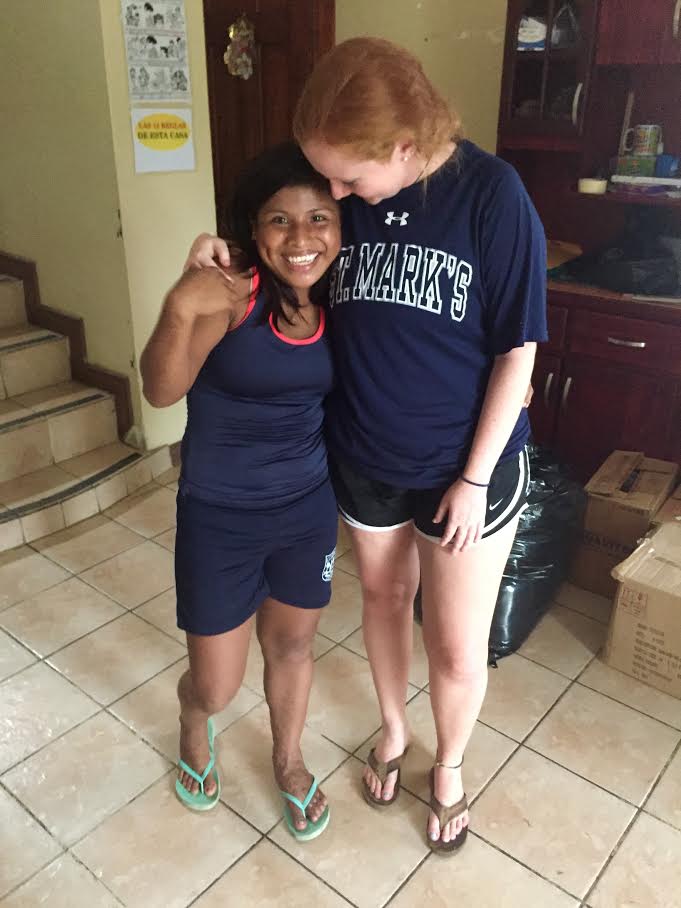 “Reading is just not a part of the culture here.” I blinked at the man standing before me, not quite sure how to respond. Five years, thousands of dollars, and dozens of hours on planes, buses, and on foot had been poured into building the “Learning Center” we now stood in. I had spent days drafting and rewriting my application to multiple grants, citing so many hopes and plans of how we were going to change so many lives bringing books and computers to the underprivileged children of Limón, Costa Rica. Now, there I was, standing in the embodiment of all of those dreams, being told that everything I had done was in vain. (more…)

Voice in Guitar and in Literature…and in Me
By Shep Greene, VI Form
Voice in Guitar and in Literature…and in Me
The guitar is an integral part of who I am. As my skill has progressed, I’ve seen my appreciation and understanding of music progress as well. Over this past year, I began to delve into a more abstract form of music in improvisation. Within this form of my guitar playing, I began to find striking similarities between music and literature. Imagine every note as a letter and every note coming together to form a riff, with all of the respective letters coming together as one word. By the end of a piece, just as by the end of a novel, you’ll have a powerful message to send out to your listeners and readers. (more…)

1946 et 2016: Deux Crises des Réfugiés
By Lucy Cao, Keely Dion, Nick Hadlock, and Michael Nantais, VI Form; Summer Hornbostel, V Form; Selina Wu, IV Form
1946 et 2016: Deux Crises des Réfugiés
Editor’s Note: The assignment in Advanced French–Francophone World:“Working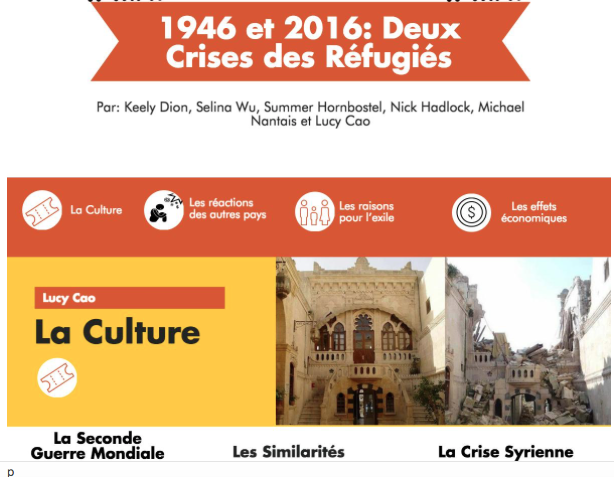 together you are going to create an infographic that makes a comparison between the refugee crisis during and after the second world war and the current crisis in 2016. You may identify some guiding questions of your own. (more…)

Shakespeare’s The Tempest: Missing Piece Storyboards
By Daisy Williams, Steven Landry, Teagan Ladner, Grace Gorman, Sam Lauten, Riley Lochhead, Jess Adams, Tracy LeBlanc, Maeve McCuine, Caroline Bailey, and Kahler Mabbs, VI Form
Shakespeare’s The Tempest: Missing Piece Storyboards
Between Season Three and Season Four of LOST, the writers (for ABC and in 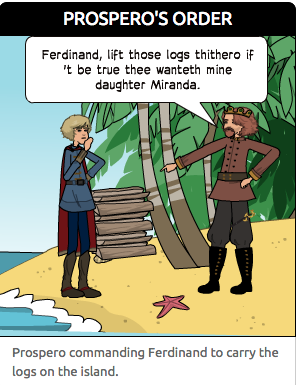 conjunction with Verizon) produced 13 short (< 4 minutes) “mobisodes” or “webisodes” that divulged scenes that didn’t appear in the first three seasons, but yet were considered part of the canonical narrative. These were called “Missing Pieces.” In Getting LOST, students were assigned to create a four-panel storyboard of a “Missing Piece” from Shakespeare’s The Tempest that they could imagine and create to be part of any aspect of the story from any point in history (from 5000 years ago to the unseen elements of Shakespeare’s plot to the present day ramifications of the characters’ actions). The storyboard–a graphic illustration that previews what would be staged or filmed by actors–could be crafted in any format or program.
Below are the varied storyboards created. Keep scrolling! (more…)


 LEO
LEO 