
Home » 2015 (Page 8)
Yearly Archives: 2015

Chalk Talk: My RANT on “Old” and “New” Pedagogy
By Adam Jewell, History Faculty
Chalk Talk: My RANT on “Old” and “New” Pedagogy
Ahhhh the smell of those white board markers, I love them, I just love them. If they do anything, they, at the very least, keep us from getting chalk all over us and having students ingest chalk dust like some sort of appetizer. It is my nostalgia for chalk that leads me to ponder something that keeps coming back to me like some sort of bad meal at every restaurant my wife and I ever go to. It is the practice of “chalk and talk” instruction. As the name entails, it is a practice as old as chalk, and well slate; I will confess I have no clue which came into use first. To be more exact, it is also as old as whenever one human sat and talked to another about something one of them was either curious about or “knew” more about. In essence, “chalk and talk” is a representation of the “old style” of teaching. (more…)

The Power of Grants in Student Development
By Camille Banson, VI Form and Ryan Lee, VI Form
Editor’s Note: The Matthews Educational Fund provides grants to students of any form who are good citizens and solid students. Grants are made for special needs such as tutoring assistance, special instruction, seminars, academic experiences of a national or international nature, and personal growth and advancement opportunities. Awards are based on merit and need as determined by a faculty committee. Last year, Camille Banson and Ryan Lee received the Matthews Fund Award to pursue their educational endeavor. Here is an overview of their experience.
Camille Banson:
Over the summer, I participated in a Boston University Summer Program. It ran for two weeks (more…)

Bring Back #BringBackOurGirls
By Lauren Menjivar, III Form
Bring Back #BringBackOurGirls
Remember the campaign #BringBackOurGirls? It was a worldwide trend on Twitter last year between April and May. Maybe you forgot about it because #ALSIceBucketChallenge took over the world during the summer, but what if I told you #BringBackOurGirls still exists. What if I told you that 219 girls out of 276 from Nigeria are still held captive by an Islamic jihadist group named Boko Haram. What would you do? Would you just continue with your life as if everything is fine or will you become one of those special individuals in the world who spread the news to others and say, “It hasn’t ended.” You might be saying, “What does this have anything to do with me? I’m not living there.” Okay, maybe you aren’t living there, but there are other individuals who are living in fear every day because someone is threatening to kill them. Put yourselves in their shoes: Is this how the world should be? They’re humans, too, and they have human rights just like we do. (more…)

Book Club: A Necessary Tool in Partnership
By Desmond Goodwin, V Form & Student Chair of the Haiti Partnership Committee
Book Club: A Necessary Tool in Partnership
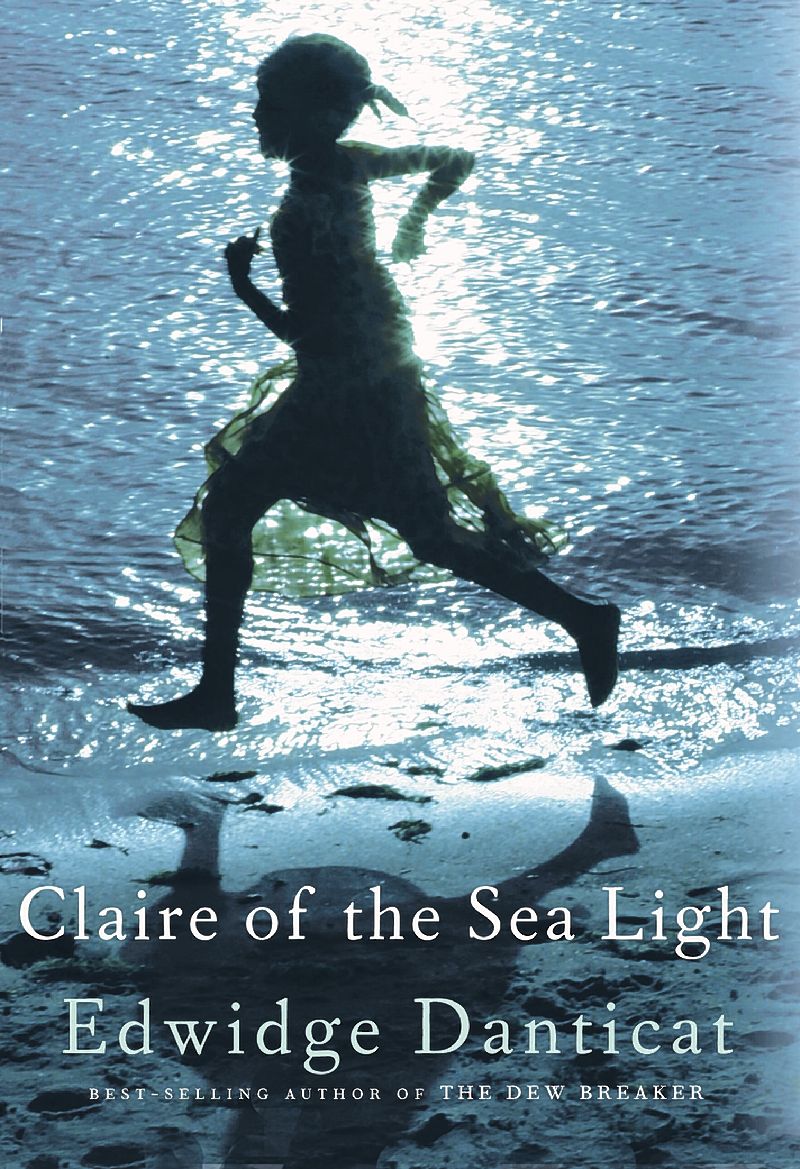 At the end of last year, the Haiti Partnership held a meeting to discuss our goals for the 2014-2015 school year. The committee members agreed that we needed to emphasize to the community that the Haiti Partnership is just that: a partnership. How would we show St. Mark’s that we are benefitting just as much from this relationship as St. Marguerite’s, our partner school in Latournelle, Haiti? We knew that we had to bring Haiti to St. Mark’s. We wanted to bring the beautiful culture to our school and teach our fellow students and faculty about life in Haiti. We wanted to celebrate the country. By creating a “Haiti Book Club,” we hoped to bring a part of Haiti to St. Mark’s and use it to strengthen our partnership with St. Marguerite’s.
The idea was to read three books over the course of the school year; one book would be read over each vacation. Over Thanksgiving vacation, we read Clare of the Sea Light by Edwige Dandicat, a Haitian-American author. Over winter vacation we read The Big Truck That Went By by Jonathan Katz. And over spring vacation, we will read A Wedding in Haiti by Julia (more…)
Biology Research Paper: Tuskegee Syphilis Study
By Conor Brockway, V Form and Damion Nsiah, V Form
Biology Research Paper: Tuskegee Syphilis Study
The first half of the 20th century was plagued by actions that are deemed unethical and frightening in today’s society. These actions included the spreading of the Jim Crow Laws, the rising of the KKK, and the speculation of the stock market, resulting in the Great Depression. Many Americans now know of these actions and condemn them. However, poor medical practices during this time period were often overlooked. Many doctors, without advanced equipment or proper safety guidelines, would perform procedures on living bodies to see what happened to them. These experiments were often completed without informed consent. One of the most unethical studies that came from the 1900’s was the Tuskegee Syphilis Study. (more…)

The Reality of Health Care (or Lack of It) for America’s Poorest
By Brittany Bing, VI Form
The Reality of Health Care (or Lack of It) for America’s Poorest
The reality of health care in America is rather grim. Compared to our foreign counterparts and prior to the Affordable Care Act, America was one of the few developed countries that lacked a form of universal health care. In Advanced Biology this year, we read Rebecca Skloot’s The Immortal Life of Henrietta Lacks, which showed the complexities between biomedical ethics, race, and access to health care. Henrietta Lacks was a black woman who developed advanced cervical cancer and died in 1951. What followed was one of the biggest injustices in medical (more…)
A Taste of Haiti
By Julie Geng, VI Form
A Taste of Haiti
Haiti, the Country
Haiti occupies the western third of the island of Hispaniola. Haiti has an area of 27,750 square kilometers including several islands[1]. The Haitian population is 10.32 million[2]. The climate is tropical[3]. Coffee, cocoa, coconuts, avocado, orange, lime, and mango grow wild. The most important cash crops are coffee and sugarcane.
Haitian History and Food
Spain, France, the continent of Africa, and the United States were crucial in shaping Haitian (more…)

A Vegan’s Manifesto
By Henry Hirschfeld, IV Form
A Vegan’s Manifesto
“Are you sure you’re getting enough protein?” and “Humans were designed to be omnivores” are common reactions when I tell people I eat vegan. A vegan diet is where one must abstain from all animal products, including meat, dairy products, eggs, and even honey. I became a vegan after working at an organic farm for the first time in the Northeast Kingdom of Vermont. Working in the soil and taking care of the vegetables every day showed me the tremendous amount of work it takes to feed people. At farmer’s markets on the weekends, I was fortunate enough to interact with my customers, and I witnessed first-hand how much they appreciate fresh produce. Mary, my mentor on the farm, helped me realize that 75% of today’s farms are polluted with harmful chemicals which affect the soil quality as well as the (more…)


 LEO
LEO 