Home » 2013 (Page 2)
Yearly Archives: 2013
Drawing the History of Technology
by Lucy Cao, III Form and Rory Colburn, IV Form
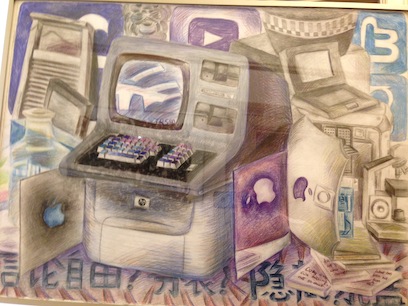 In Art Studio II, students read an article in Harvard Magazine called “The Digitization of the Humanities.” They looked critically at a large still life of objects representing the history of technology, including objects we do not readily associate with today’s lightning speed of information gathering and synthesis. The assignment was to make a drawing from this group of essentially black and white objects using color, line, and surface metaphorically. Choosing what to emphasize and identifying issues and ideas about the role of technology in their lives was a major part of the assignment, and, at times, it became necessary to depart from observational reality to make visible their personal point of view. (more…)

Mothers’ Love for Animals Leads to Children’s Rage Against Them
by Mikaela Karlsson, VI Form
Loving pets is human nature. Pets love unconditionally and make someone feel needed, as these domesticated, helpless animals are unable to survive without the care of humans. However, according to society, animals are not meant to take the place of a child in one’s heart and household. A mother’s love is supposed to be unequaled and unconditional, and an animal challenging this law of nature often results in psychological repercussions and an emotional response from the child. Geraldine’s love for her cat in Toni Morrison’s The Bluest Eye is similar toChantal’s mother’s love for her rabbit in Jessica Penzias’ “Death By Oboe,” and animals are abused in both stories (more…)
Working with Working Memory
by Andrew Watson, President of Translate the Brain and Contributor to St. Mark’s Professional Development Through Sponsorship by The Center for Innovation in Teaching and Learning
Here’s a quick exercise: think of a phone number you know well and say all ten digits out loud. (Go ahead, say ‘em. No one’s looking.) Now, say those ten digits in the reverse order. (Yes, you can do it.) Okay, say them in the reverse order: AND, add 1 to the first digit, 2 to the second, 3 to the third, and so forth…
Don’t feed bad that you couldn’t get all ten digits; Rain Man could, but practically no one else can. When you tried to do that mental work, you were using your working memory: a specialized cognitive capacity that simultaneously (more…)
The Art of Interviewing
by Anne Behnke, Director of Admission
Perhaps the most crucial element of the interview process is the importance of making our families feel comfortable and safe; our positive and benevolent behavior and our reactions can often dictate theirs. I have been interviewing students and parents since I first began in Admission some 29 years ago; interviewing is so fun and so interesting, but it can also be intimidating for the first time interviewer or interviewee. One really cannot predict how any meeting will precisely unfurl when a student or his or her parent or parents sits in one of our offices. Our students and parents who visit St. Mark’s comprise the public, private, charter, and home-schooled families. Many are fully (more…)
Simply Not Sustainable: On Meat Eating
by Hayden McCall, VI Form
For thousands of years, humans have been meat-eaters. Originally, animals were hunted and the livestock and poultry “farms” that we have today did not exist. Before the meat and processed food industries came to be and before supermarkets existed, people did not have much of a choice about what they ate. Therefore, there was an economical advantage to eating meat, as it was almost always available and though people had to hunt, they did not have to trade in valuable crops or currency to acquire meat. Socially, there is no question that eating meat was sustainable; people (more…)
The Human Spirit Is Alive in Haiti
by Jammil Telfort, IV Form
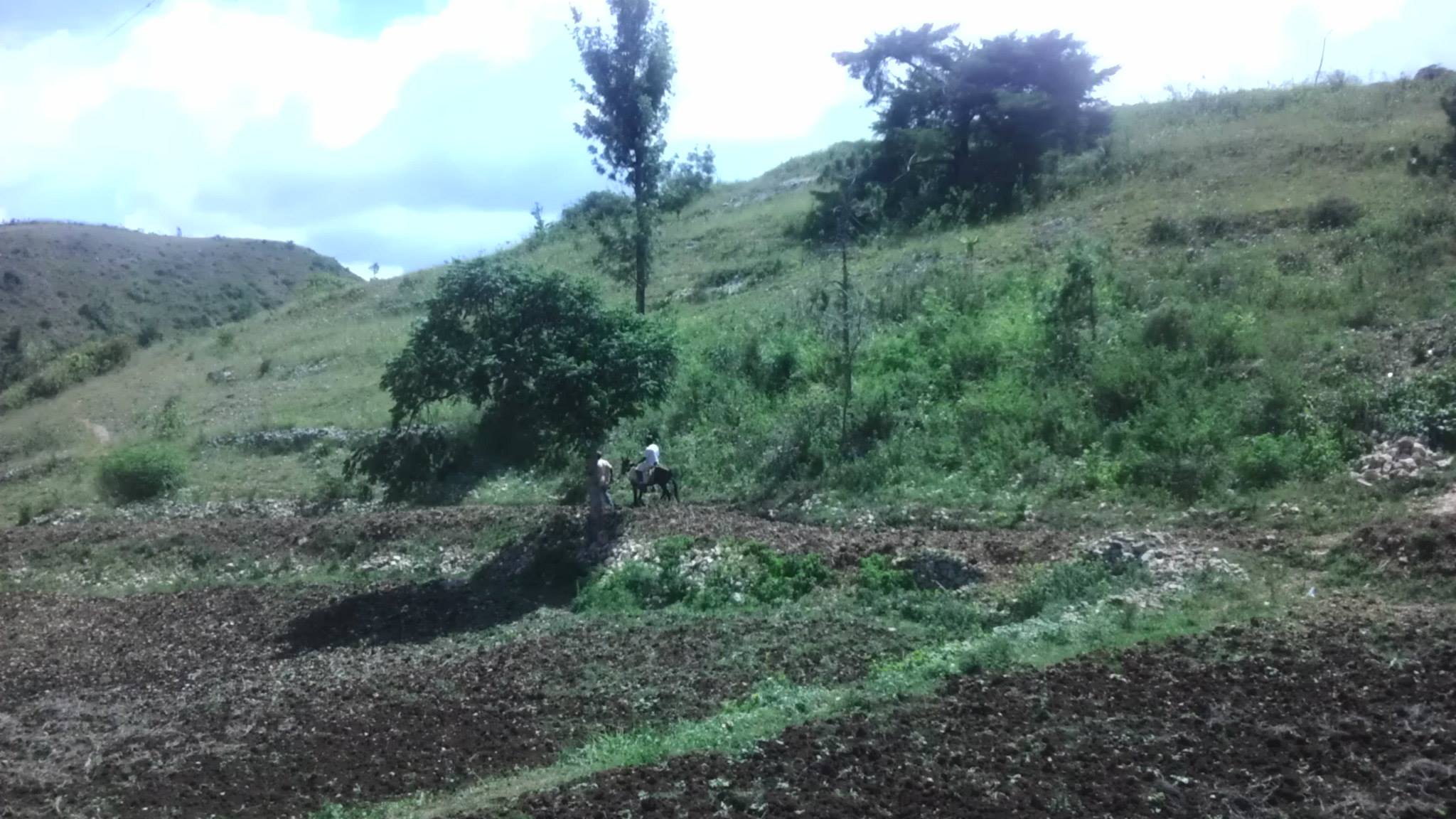 Sadness. Desolation. Poverty. Fear. Hunger. Disease. These are some of the words that people immediately think of when someone mentions Haiti. In the minds of many Americans, Haiti is a broken down, third world country that is being ravaged with the aforementioned afflictions and in need of dire assistance. The general population does not live in nice homes, and some people even live in tents due to the horrific earthquake that decimated much of the country three years ago. Most citizens do not have access to medical care; what medical care there is often takes (more…)
To Be Remembered Is To Live On: El Día De Los Muertos
by V Formers Erica Christensen, Camille Banson, and Brittany Andrea
The AP Spanish Language class was recently assigned a project for the Day of the Dead. The Day of the Dead is an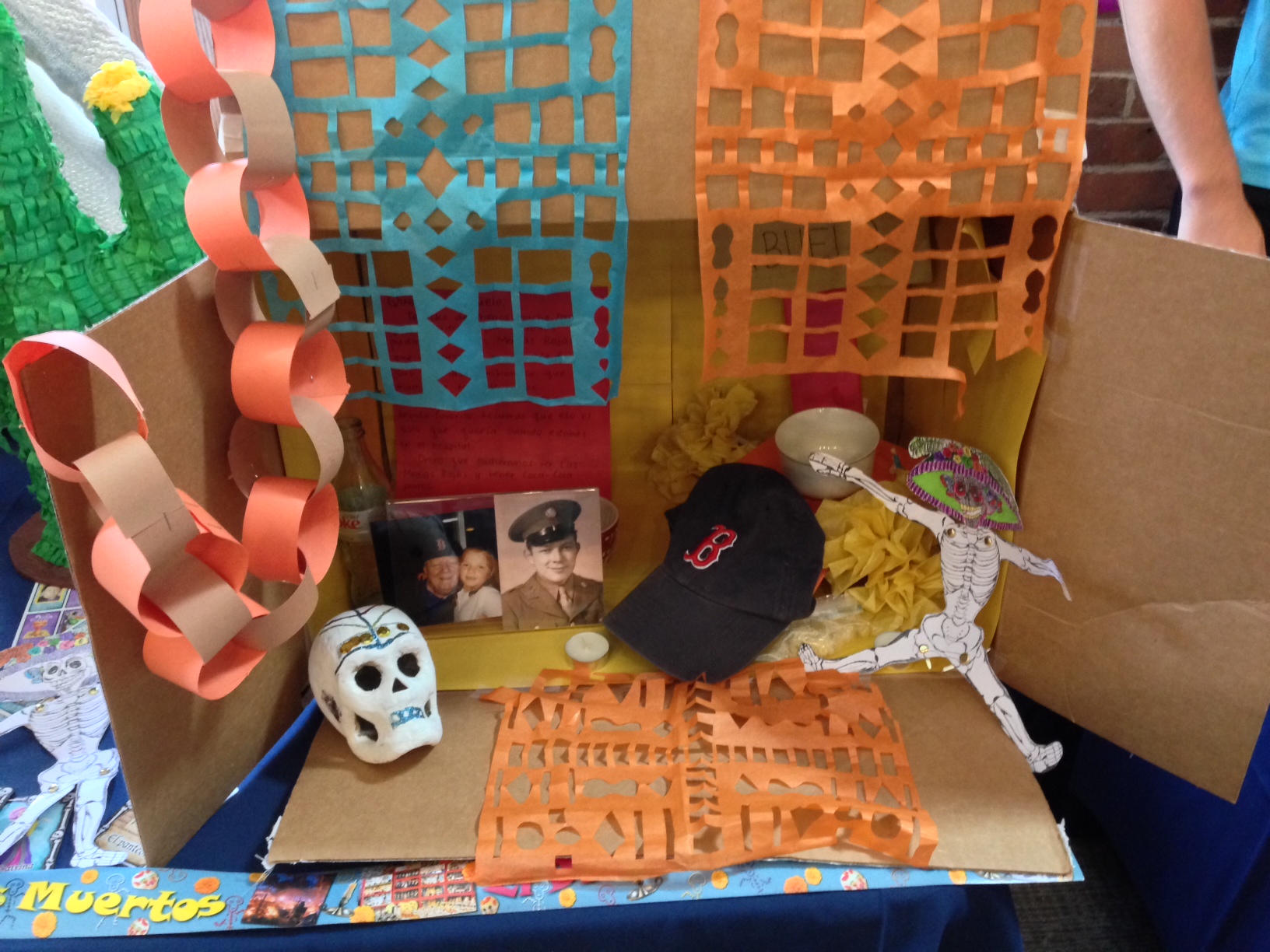 important holiday in Latin American culture, celebrated on November 2nd. During the holiday, Latin Americans remember and honor their lost loved ones. In their culture, the dead are kept in their memories and made an integral part of their lives. While such familiarity with the dead is contradictory to what we learn as children in the United States, the study of Spanish culture helps to improve our knowledge of the Spanish language. The students were assigned to make and dedicate a traditional Hispanic altar to someone close to them that had died. They were (more…)
iFortune
by Val Kessler, VI Form
Every coincidence is scientifically proven to be an outcome of probability. However, I do believe humans can interpret events into something meaningful. A given meaning will vary from person to person, depending on how he or she thinks and what is happening in his or her life at the moment of a coincidence. For instance, if someone is having a bad day and, as soon as the radio is turned on, a sad song plays, he or she may think of this as synchronicity, or the viewing of two events as connected, albeit they do not have a causal relationship and would not normally be related as meaningfully connected. Yet, if someone who was having a great day heard the sad song at the same time, also after (more…)


 LEO
LEO 